Ancient monasteries, misty valleys, and hidden candied treasures collide in Spain’s most mystical green corner.
I climbed the helical stone stairs of the Santiago de Compostela cathedral, a cruel haul. I did not make it to heaven, but I did make it to the roof – not ideal for those petrified by heights like I was.
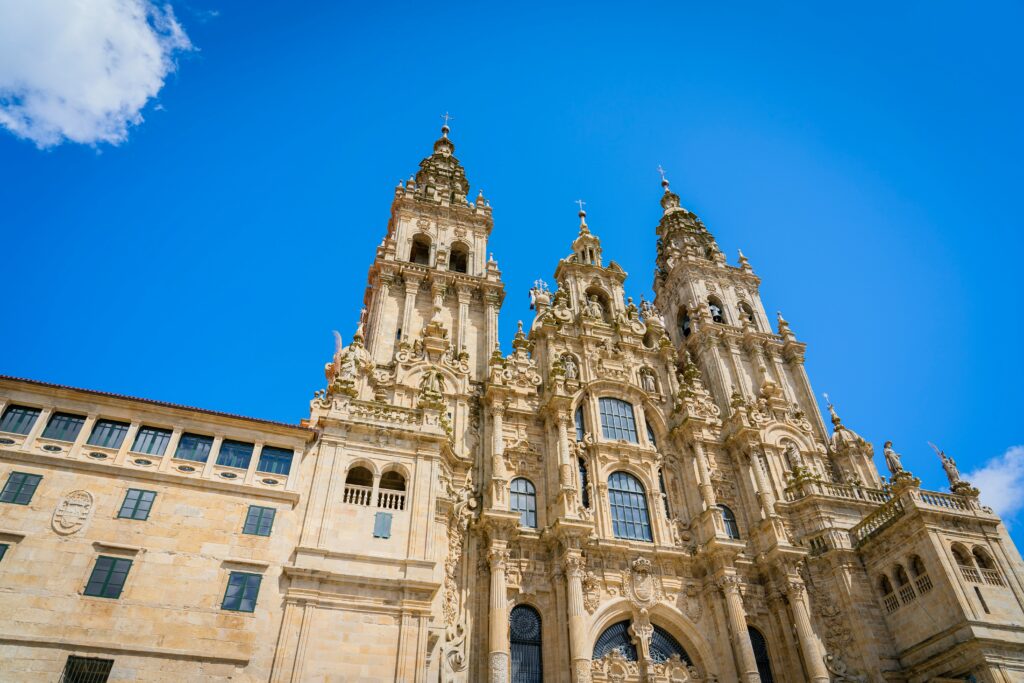
The roof was a disorienting angled surface, shingled with enormous granite blocks, with the very real possibility of tobogganing into the plaza below, thronging with pilgrims. The cathedral is the culminating point for countless pilgrims walking various routes of the Camino de Santiago, and the sudden appearance of a man emerging from the heavens like a blazing comet would have caused a religious stir. And besides that, it would have derailed my secondary quest.
The secondary quest
I was in Galicia to gad about, but I also had an ulterior purpose: chestnuts. Located just above Portugal in Spain, until recently, Galicia had vast chestnut forests which have sustained its population through times of need. In World War II, they were sustenance for many. I learned to love them as a child, shivering in the winter in New York City. They were pure street food, roasted over charcoal in giant buckets and handed over in small brown paper bags. The charred shells exuded a smoky perfume like nothing else, warming my hands and sometimes burning my fingers as I peeled them.
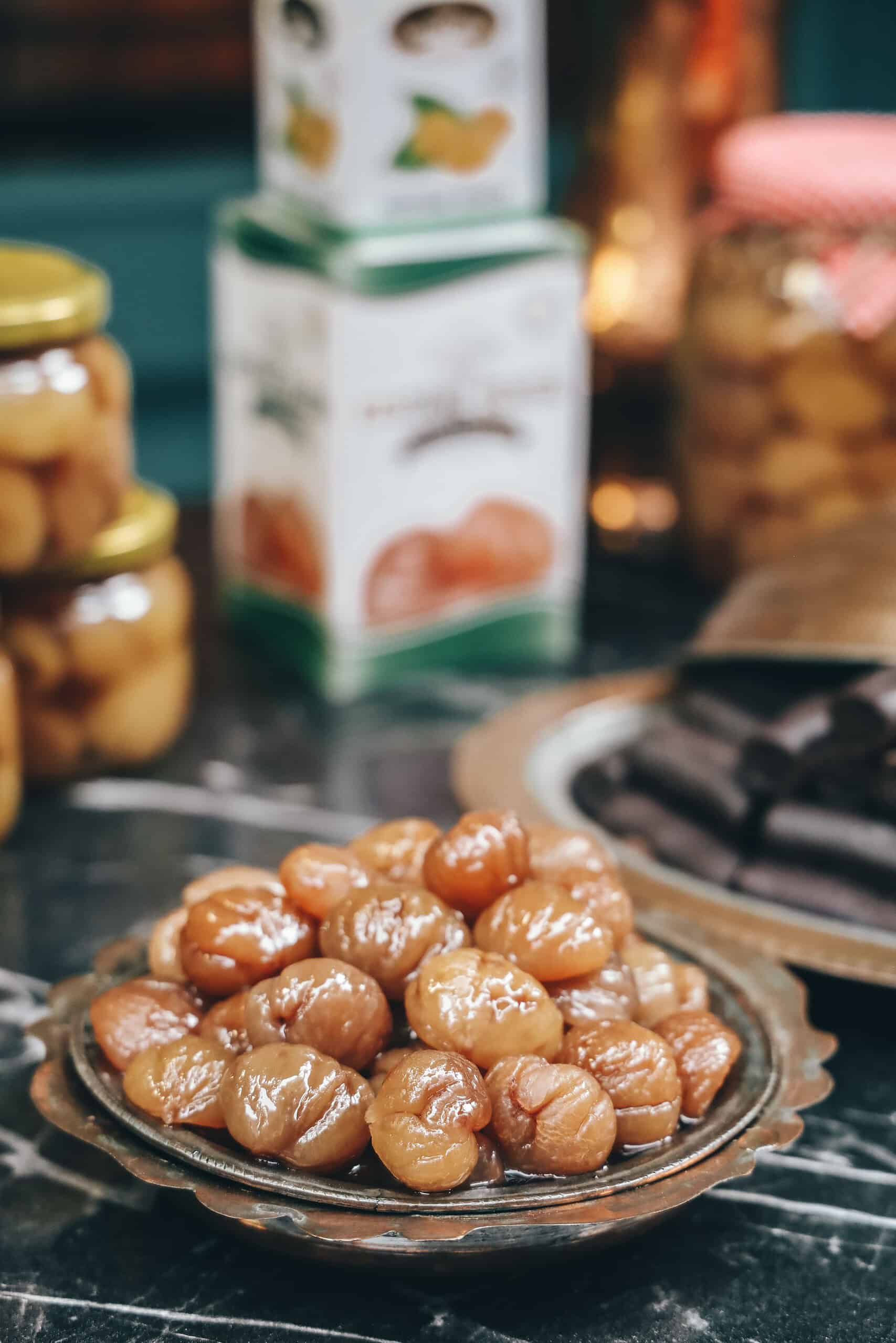
Here, I was after more refined fare: marrons glacés, candied chestnuts, originally created for royalty. Raptured by sweetness, they are a delicacy I crave, on par with truffles. And Galicia remains one of the few places where they are still made.
Eyes open for chestnut mongers, I explored the city’s labyrinth. There were mendicants kneeling or actually lying prostrate, cups before them. And pilgrims aplenty, many with hiking gear, milling about, perched like pigeons on almost every surface.
At Restaurante Solleiros, I was served honest ingredients simply prepared: boneless pork rib on bomba rice in a paprika sauce, and an extraordinary dessert – Tortilla Romana, from a recipe purportedly stolen by a Roman galley slave: a sweetened omelet filled with vanilla custard, sugared and torched. But where were the chestnuts?
Heroic viticulture
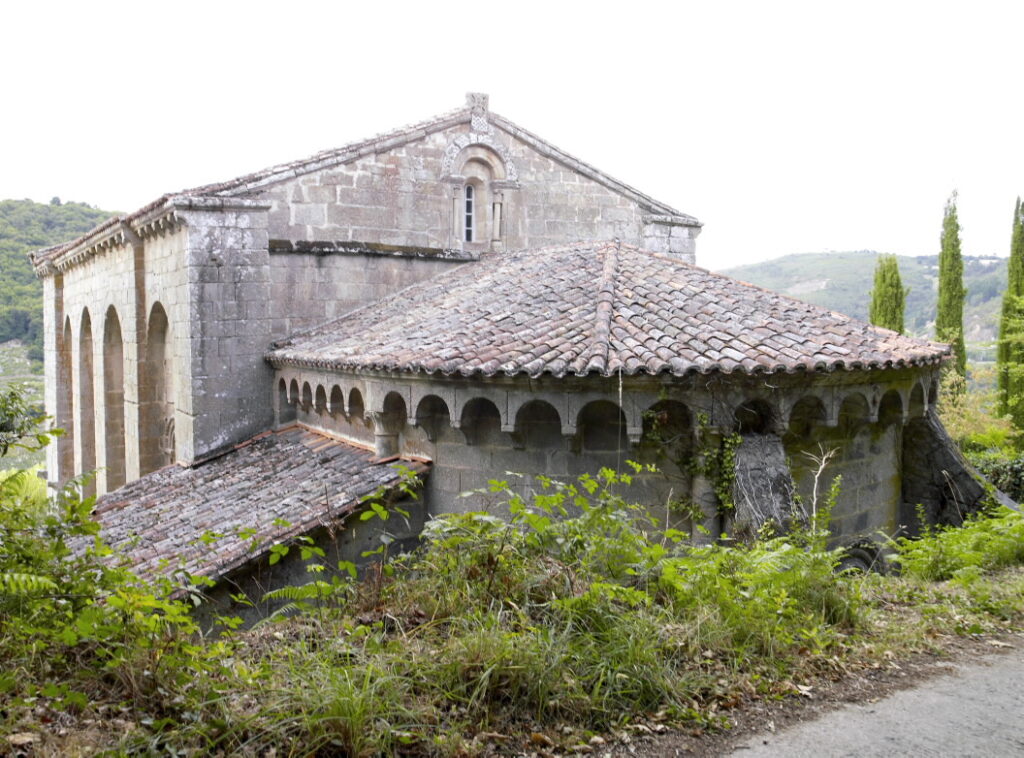
It was time to lengthen my stride. The next morning, I traveled 60 miles northwest along winding roads to visit the 800-year-old church, Santo Estevo de Ribas de Miño, literally translated as the Church of Saint Stephen of the River Miño, which flows far below. Walking up the spiral stone staircase to its gallery felt like a screw thread. Stone sarcophagi rest outside and beneath the altar, and flying buttresses brace the back. I ate fresh cherries from a tree in front.
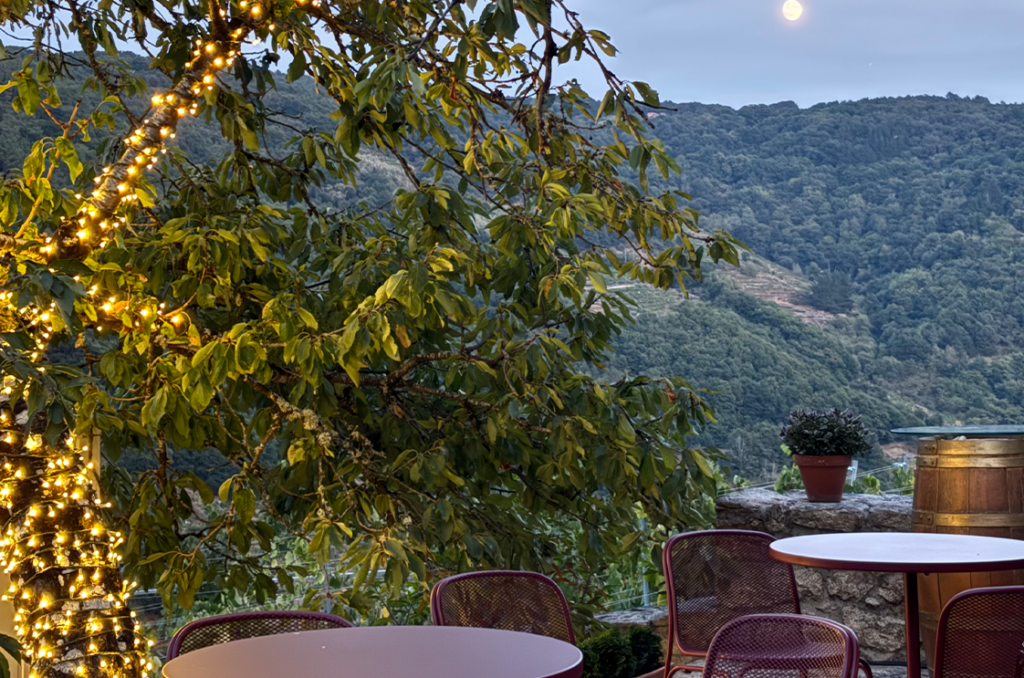
A couple of miles down the Camino de Invierno led to an uneven dirt track, part of the old Vía Romana, used when the road through France was snowed over. Descending a river valley thick with chestnut trees to the river below, the slopes here were terraced with stone retaining walls, sprouting grapevines. Tending the vines on slopes close to vertical is often called “heroic viticulture.”
At winery Vía Romana, thin slices of smoked trout and white asparagus were served with a honey mustard sauce. Improbable, but it worked. It was paired with a winsome white – young, no tannin, drinkable with anything – Vía Romana do Camiño. There was chicken, from birds Chef Manuel Rodríguez raises himself, stuffed with dates, Japanese mushrooms, and spinach, in a haunting chestnut sauce, tauntingly close to what I sought.
Talking with Chef Rodríguez, I learned he too is a chestnutophile, and it comforted me to find my obsession shared by at least one other. He recommended a Galician gelateria chain that carried marrón glacé gelato, the only one, he said: Bico de Xeado.
That evening I rested at Parador de Santo Estevo, a retrofit from a former monastery, with stone walls, carvings, statuary, and an adjoining church preserved. As I fell asleep, I’m certain I heard susurrations from its earlier residents.
Heart of the city
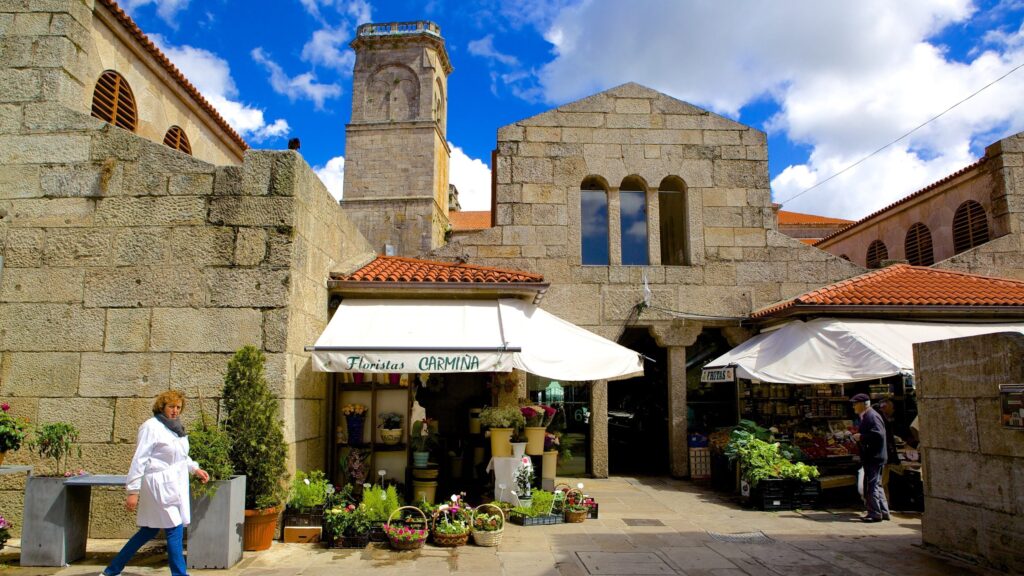
Back in Santiago de Compostela, nothing goes to a city’s heart more than its main market. Mercado de Abastos de Santiago’s exterior is stone, plastered within, with long parallel galleries of barrel ceilings, each one selling products of a kind.
Mongers sold the wildest menagerie of seafood, some alive: from crayfish, clams, and brown crabs, to monkfish, hake, octopus, and squid. Scallops lay splayed open with orange roe sacks attached to ivory muscle, toxins neutralized by bathing them in circulating seawater until safe, pristine, and as delicious as lobster coral.
Over at the meat section, I met affable butcher Juan Caramés, who has the muscular grace of a surgeon, working in Carnes Chelo&Munico. He grew up not far from me in New York and worked in his grandparents’ butcher shop as a child. Two small carcasses were on display in his case, one with an elegantly trimmed tail – they were young goats.
Nearby, galleries with restaurants would take any produce and prepare it as you liked. Surprisingly, I saw no chestnuts at the market, nor the gelateria that Chef Rodríguez spoke of.
At Casa Marcelo, led by angels
At one-star Michelin restaurant Casa Marcelo, there was no sign outside, maybe to enhance its exclusivity. One-star establishments often rival their two- or three-star siblings, sans the tweezered flowers and obsequious service. And they’re less expensive.
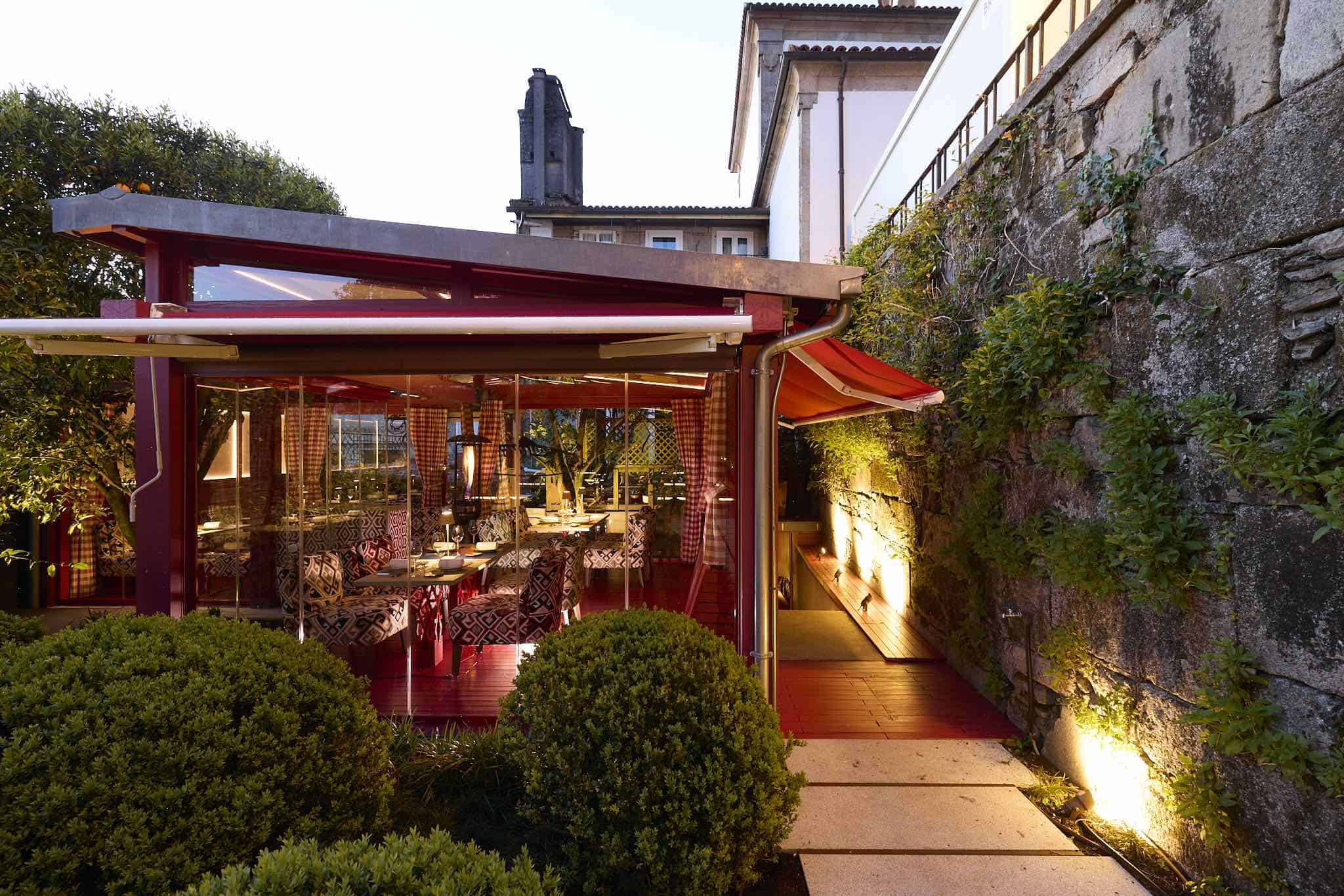
Menú Degustación was how they rode, and like a high mountain range, the meal was jagged but excellent. Standouts were an appetizer of custardy cheese soup with caramelized onion and garlic in an eggshell. A spring cappuccino, made from peas and mint, had stratified temperatures, which startled and satisfied. The highest peak was duck breast, cooked perfectly rare with crisp skin, in a demi-glace with large poached and sweetened pitted cherries. An exemplary marriage.
Wandering the streets of the Old City that evening, I stumbled on a store named Delicias de Bohemia. As the fog cleared, I peered through the glass: there were actual chestnuts in their signature thorny husks, like sea anemones, hanging from the thin branches of a facsimile chestnut tree and artfully strewn about. I’d hit true north.
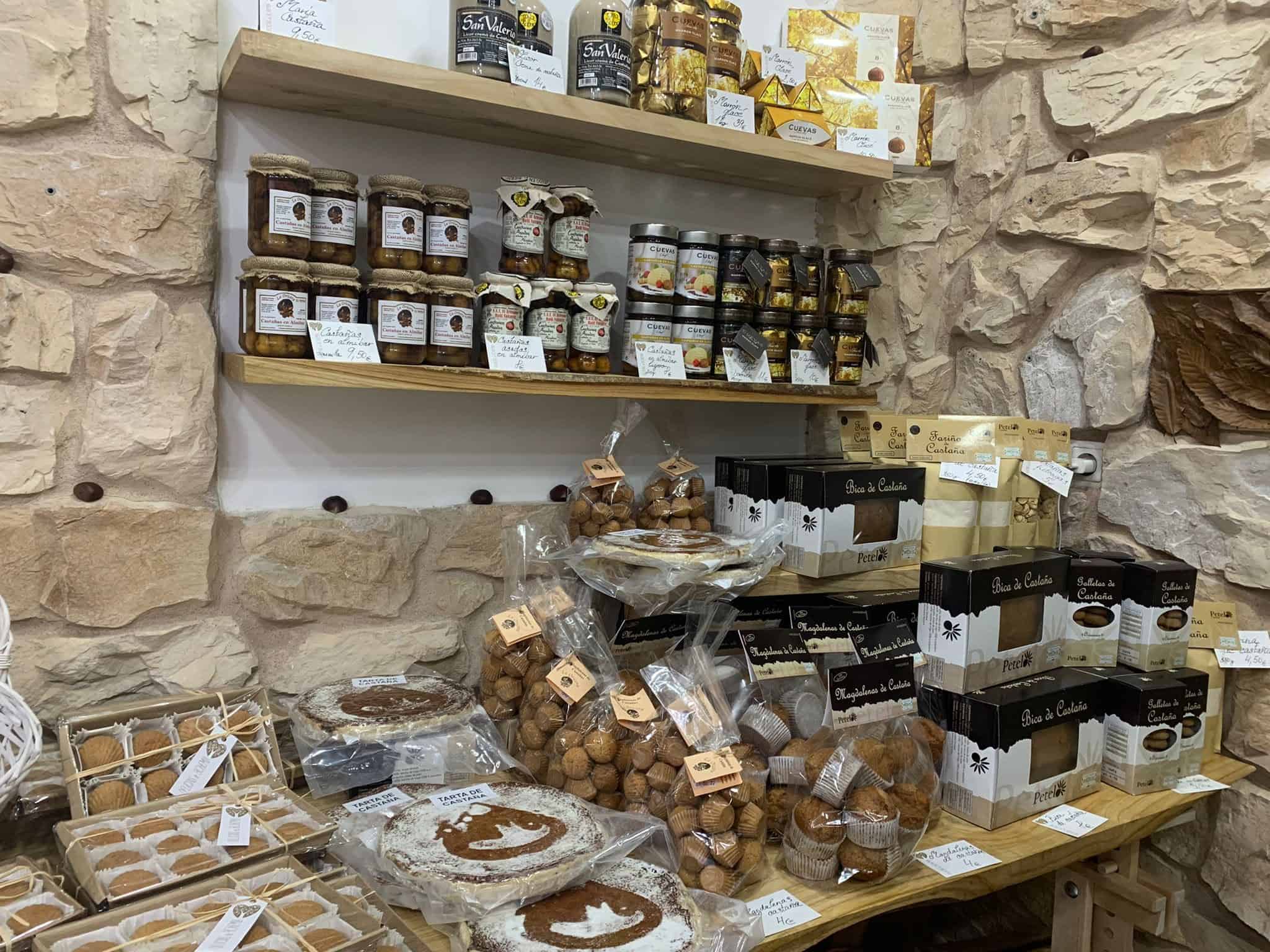
They sold marrons glacés from two different producers, along with chocolate-covered marrons glacés and dark chestnut honey, liquid or crystallized. They sold chestnut pasta, flour, crackers, cookies, cakes, jam, syrup, liqueur, beer, and more. The owner, Veronika Viadelova, told me her honey was made from 150-year-old chestnut trees in a forest an hour away. Her marrons glacés came from Spain’s finest producers.
All the woodwork in her store, from shelving to a frieze of chestnut tree leaves above her entrance, was made from chestnut wood. Before leaving, I asked Veronika if she knew of the gelateria, Bico de Xeado. She smiled and pointed; it was close by. I left her shop carrying the maximum I could hold.
Nothing about Bico de Xeado suggested it contained the object of my lust. I entered, and there it was: Marrón Glacé, elaborado con leche de nuestra granja (made with milk from our farm). Bewitching marrón glacé, sweetened autumn forest, transmitted by frozen custard. Bliss.
Bagpipes and pilgrims
Amidst the complex shadows of the Old City’s stone walls, I walked to my hotel, NH Collection Santiago de Compostela. I turned a corner and suddenly heard bagpipe music. There stood a bagpiper in full regalia, piping his heart out – the Celts populated Galicia centuries ago, though cut off by land routes and accessed mostly by maritime travel. And so bagpipe music is part of Galicia today.

All week, I had watched pilgrims arrive in Santiago, exhausted and exhilarated, each pursuing something that mattered deeply to them. I’d come in search of chestnuts rather than salvation, but perhaps the difference was not so great.
Each guided by a star; I was a pilgrim. As are we all.
David Greenberg was a prolific author of children’s poetry and lecturer. His passion for travel and its culinary treasures led him from poetry to travel writing, where he brings a poet’s ear to the craft.