As Bali’s most popular hubs strain under the weight of overtourism, the island’s quieter corners are telling us a different story.
Once famed for its sense of ease, ritual and cultural rhythm, Bali is now often associated with its more commercialised and crowded enclaves. The island draws more than 7 million overseas visitors annually, but also generates an estimated 3,436 tonnes of waste daily, with landfills like Suwung already at full capacity. The gap between image and reality has become difficult to ignore.
That tension is also visible online, in a steady stream of “expectation vs reality” posts, where visitors hoping for a spiritual escape are instead greeted by “crowds, traffic and the cacophony of construction”.
But has the island’s authenticity really been lost – or simply long shifted away from its most instagrammed areas? The pressures on Bali’s southern beach hubs are unlikely to ease. But beyond its busiest corridors, another model is taking shape – one that spreads visitors more evenly, is more respectful of ecosystems and creates meaningful opportunities for communities often overlooked by mass tourism.
Across areas like Sidemen, Munduk and the island’s less-travelled highlands and coastline, there are resorts that are more rooted in communities, landscapes that shape daily rhythms and food guided by seasonal, local traditions. We look at five gorgeous properties that excel in leisurely, elevated Balinese hospitality and meaningful sustainable practices, all set within island wilderness.
Wapa di Ume Sidemen, Sidemen Valley, East Bali
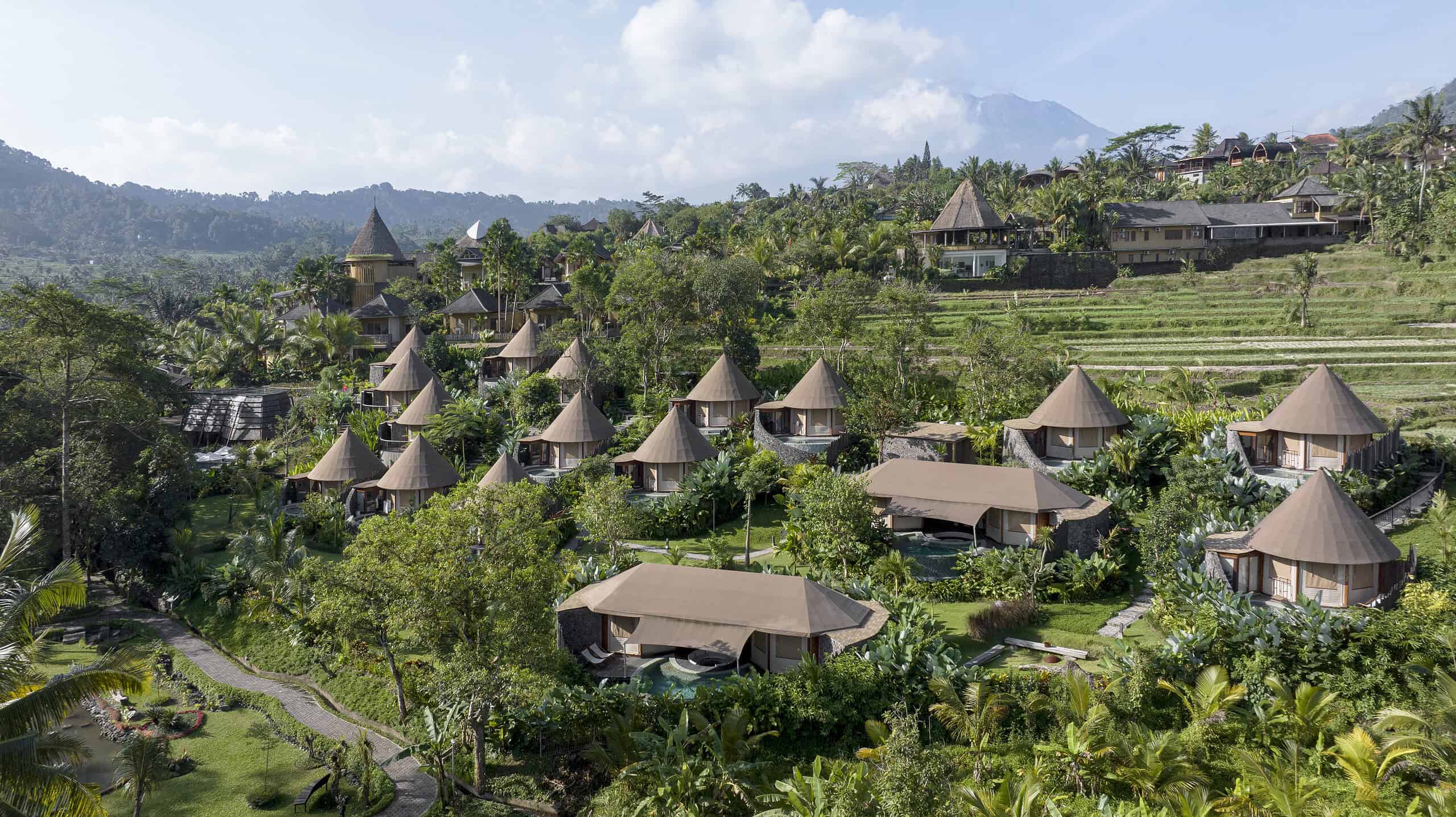
Overlooking the rice terraces of Sidemen Valley, Wapa di Ume Sidemen offers a slower glimpse of Bali – where farming, not tourism, still sets the pace. The name itself tells a story: “Wapa” is drawn from its founder Wayan Pasek, and “Ume” means rice field- Wapa di Ume translates simply as “Wayan Pasek surrounded by the rice field.” Nearly three decades on, that rootedness still defines the place.
Guided by Tri Hita Karana, the locally-owned resort sees hospitality as a way of strengthening the community that surrounds it. Its “While in Sidemen” initiative celebrates East Bali’s heritage through live demonstrations of Ngulat – traditional songket weaving – alongside local arak makers, comic artists and Rindik bamboo musicians, supporting the livelihoods of the craftspeople who carry these traditions. Guests are encouraged to explore temples, rice fields and villages at a pace that feels closer to local life.
Buahan, a Banyan Tree Escape, Northern Ubud, Central Bali
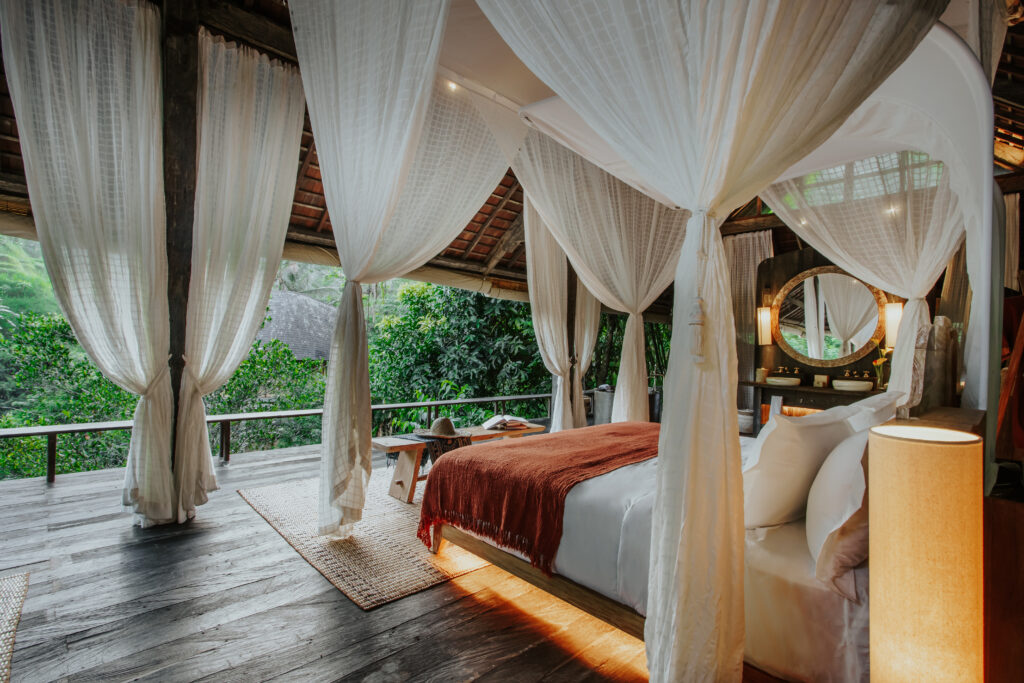
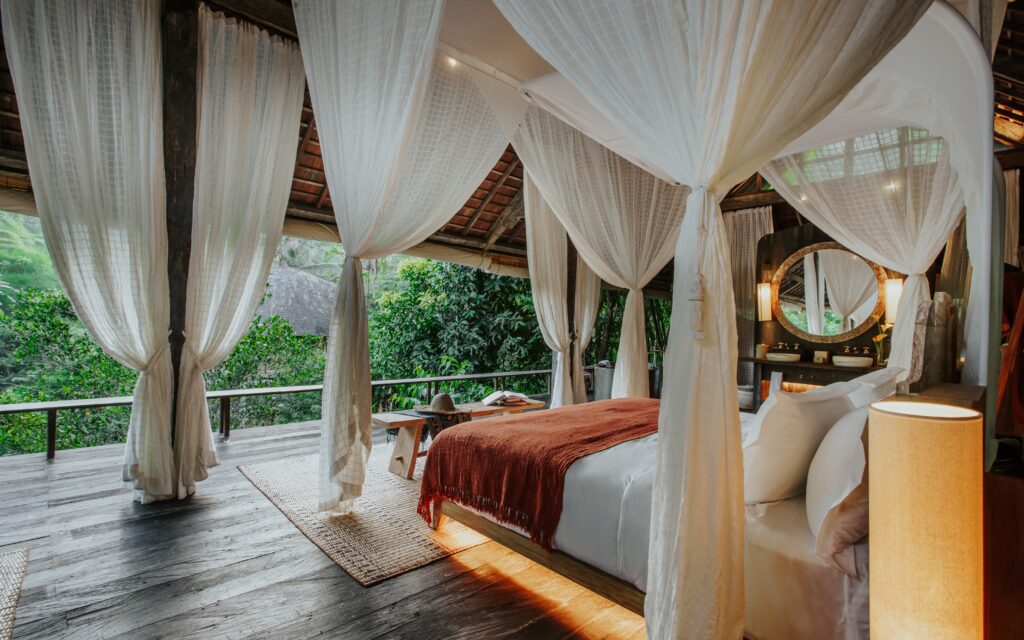
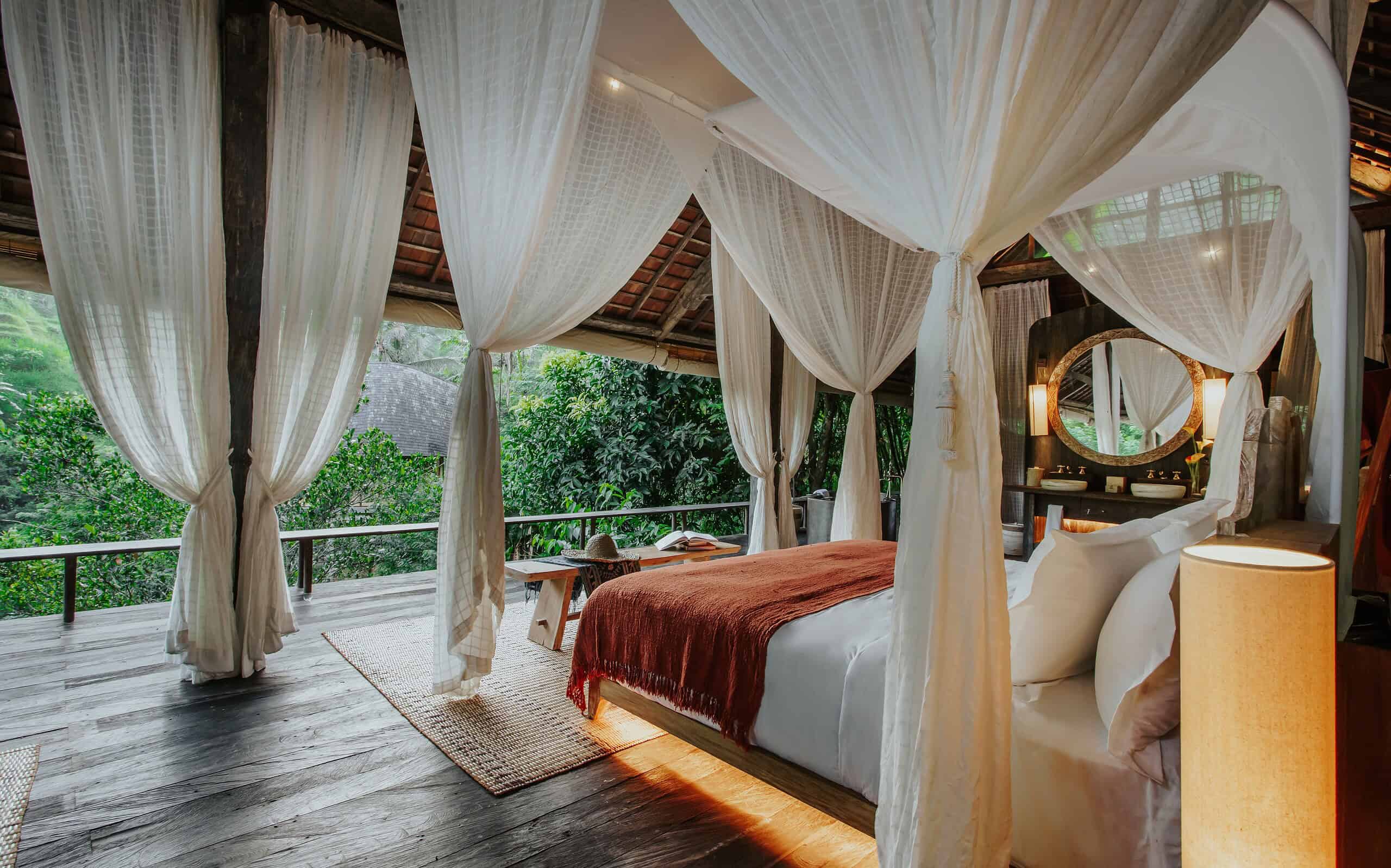
Set deep in the jungle above the Ayung River, Buahan is a fully open-air retreat where the absence of walls becomes part of the experience: the result of 16 design iterations and land acquired two decades before the resort opened.
“When I say no walls, no doors, it doesn’t only mean physically,” explains Hengki Adnyana, the property’s Balinese Resort Manager. “It allows you to be psychologically and emotionally connected with your surroundings. I don’t say welcome to your room: I say welcome to the valley. You’re stepping into the valley itself.”
Even the materials carry meaning. “Everything is reclaimed ironwood, which in the past used to be part of a pier or a bridge in Borneo,” Adnyana says. “It tells a story about reincarnation, providing a second purpose to something you don’t think has value anymore.” The open-plan heart of the resort echoes the bale, the traditional open-sided pavilion that inspires much of Buahan’s architectural language.
Dining follows a hyper-local philosophy, with menus shaped by botanicals foraged from the surrounding rainforest. “The forest provides an abundance,” Adnyana notes.
What sets Buahan apart, though, is its regenerative ethos, guided by the Balinese philosophy of Tri Hita Karana: harmony between people, nature and spirituality. The team is 100% local, with 80% from the surrounding villages. “Who is best to tell you the story of our surroundings? It’s the people themselves,” Adnyana says. Initiatives range from a goat-rearing programme that supplies organic compost to seven hectares of rice fields, to a firefly initiative, Bright Back the Light, that invites guests to help restore and revive a dwindling population.
Munduk Moding Plantation Nature Resort, Munduk, North Bali
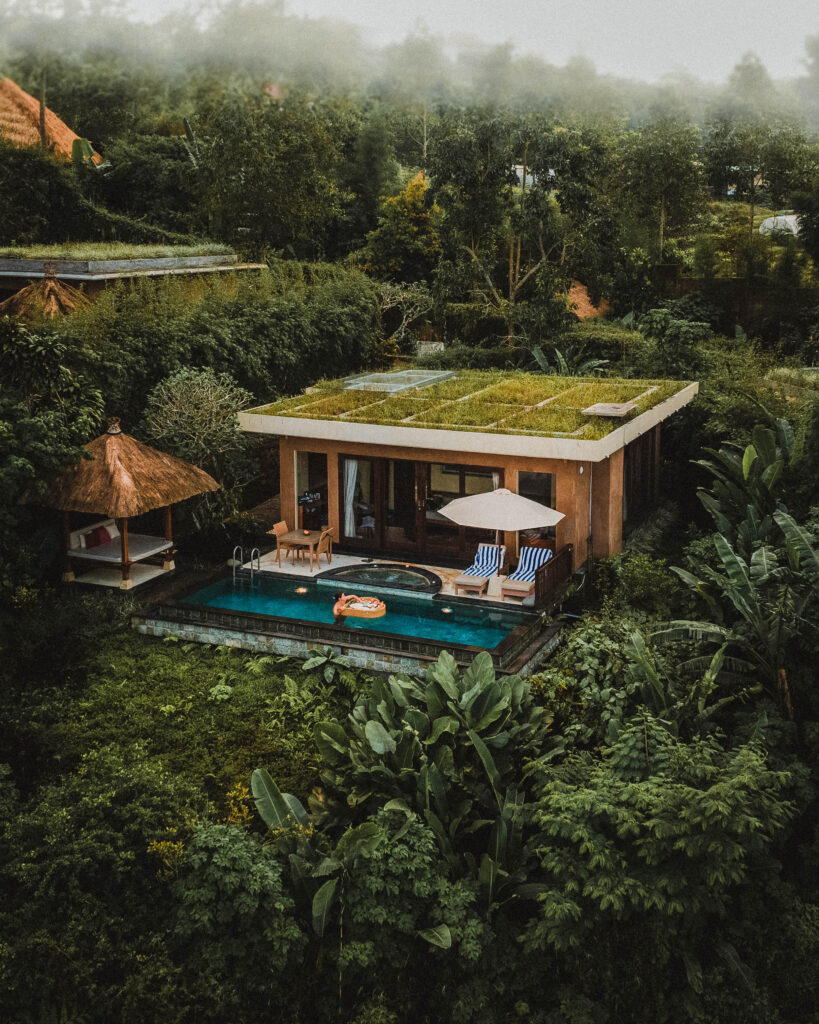
In Bali’s cool northern highlands, this working coffee plantation retreat offers sweeping views across jungle valleys towards distant coastlines. Far from the southern crowds, mornings begin in mist and the air carries the scent of roasting beans.
Designed by renowned Balinese architects Popo Danes and Era Anastasia, the Munduk Moding Plantation Nature Resort was built in close connection with the local community – a relationship that remains central to everything it does today. “We are not just a resort surrounded by nature – we are part of a living landscape,” Mr. Ngabda, the property’s Sustainability Leader, explains.
Run by a 100% Balinese team of around 150 people, sustainability is threaded through every layer of the operation. Wastewater is treated through an Ecological Wastewater Treatment Facility and reused for irrigating the gardens and plantation, a solar energy system reduces dependence on conventional electricity and the resort’s recycling centre doubles as a community learning space. Through MMP Experiences, visitors can join recycling workshops, coffee farming sessions and cultural activities – where participation and immersion are woven into the stay itself.
“The future of tourism in Bali should be more balanced,” Ngabda adds. “North Bali, especially Munduk, has so much to offer: its nature, traditions, cool climate, farming culture and slower rhythm of life.” Guests often leave remembering not the infinity pools, but the misty mountain mornings and the warmth of the people behind them.
Sumberkima Hill Retreat, Sumberkima, Northwest Bali
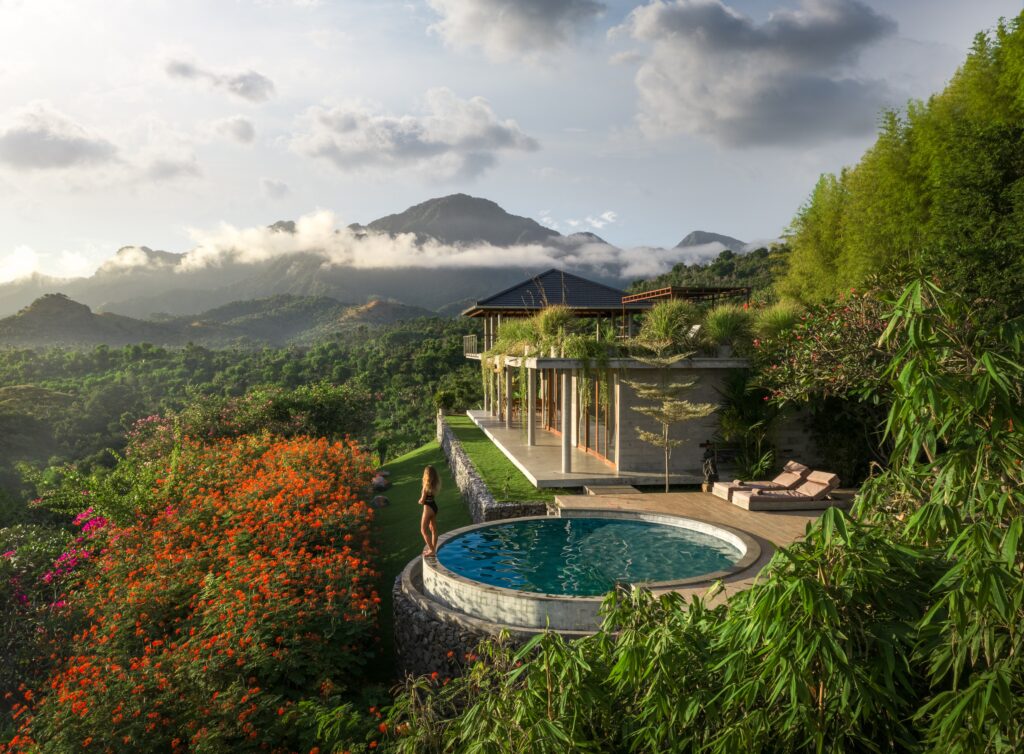
In the remote northwest, far from Bali’s tourist circuits, Sumberkima Hill is a sanctuary where one hundred villas are scattered across a vast landscape of hills, open space and sea views. Since opening in 2015 on land that was, at the time, entirely undeveloped, it has grown organically into something closer to a village – no two villas are the same, privacy is built into the design and the surrounding hills offer some of the island’s most rewarding hiking.
“We really see ourselves as a village, not a resort – because a resort is monoculture and we are very diverse,” founder Bernard Hudepohl explains. “If you want to experience the real Bali, this is the other side of Bali.”
That long-term thinking extends to the water: Metamorfosa, an underwater reef restoration project in Sumberkima Bay, places sculptural structures beneath the surface to attract marine life and regenerate damaged coral ecosystems – with Menjangan Island, one of Bali’s finest diving and snorkelling sites, just offshore.
Soori Bali, Kelating, Southwest Bali
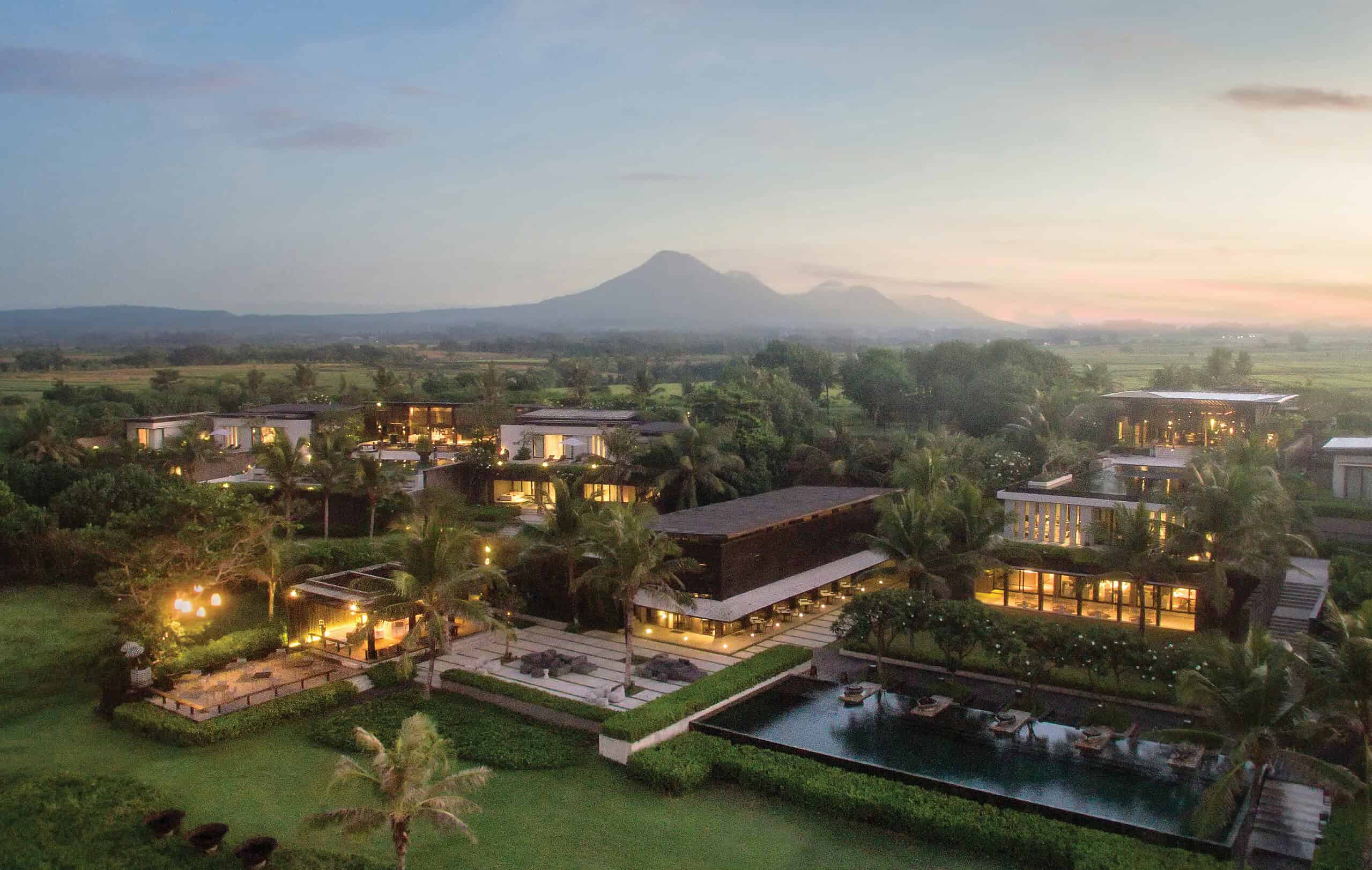
On Bali’s south-western coast in Kelating, Soori is a design-led retreat where black-sand beaches and terraced rice fields meet contemporary architecture. Its walls are clad in paras kelating – a cool grey sandstone manually extracted near the village – and eleven religious shrines, built in consultation with local spiritual leaders, honour the coast’s deep energy. It shares its land with rice farmers and its coastline with sea turtles, with permanent beach access granted to pilgrims for religious processions year-round.
“Soori was born from a feeling,” recalls founder Soo Khian Chan. “The sacred views of Batukaru Mountain, the thunderous ocean, the wind caressing the buds of rice paddies. These were the sensations that kindled a dream.” Guided by Tri Hita Karana, the Soori Foundation funds the Little Dancers and Little Musicians of Kelating – fully funded indigenous schools preserving the Balinese Legong and Gamelan traditions within the village that has always carried them – alongside a turtle rescue programme and a plastic-for-rice initiative.
Culinary experiences are equally considered. Led by Executive Chef Benoit Le Rioux, the kitchen tends a working herb and vegetable garden – six varieties of mint, sage, chervil, tarragon. Soori serves exclusively à la carte to reduce food waste and composts one tonne of kitchen waste monthly into roughly one hundred kilograms of garden-ready compost through a larvae-based system developed with Magi Farm, a Balinese social enterprise. “True luxury at Soori Bali is precision and restraint,” says Chan. “It is the privilege of inhabiting a place that has been cared for, rather than merely consumed.”
Writer Nefelie Kalavrezou is the founder of Eco Travel Inspo.