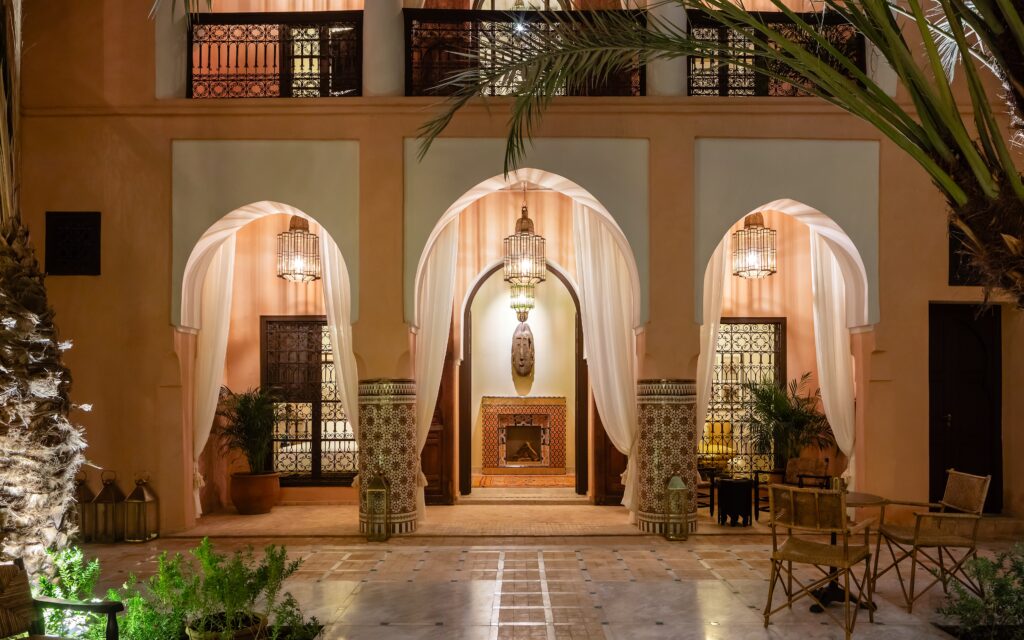
Down a winding alley in the medina’s oldest quarter, Dar Al Dall is a extraordinary riad that redefines what a Moroccan city stay can be.
Marrakesh’s riads are an essential respite from the city’s beautiful chaos – personal oases that have historically allowed travellers to temporarily retreat from the heady sensory overload of the medina. They come in all shapes and sizes, from traditional family-run homestays to ultra-luxe compounds that almost make you forget which country you’re in.
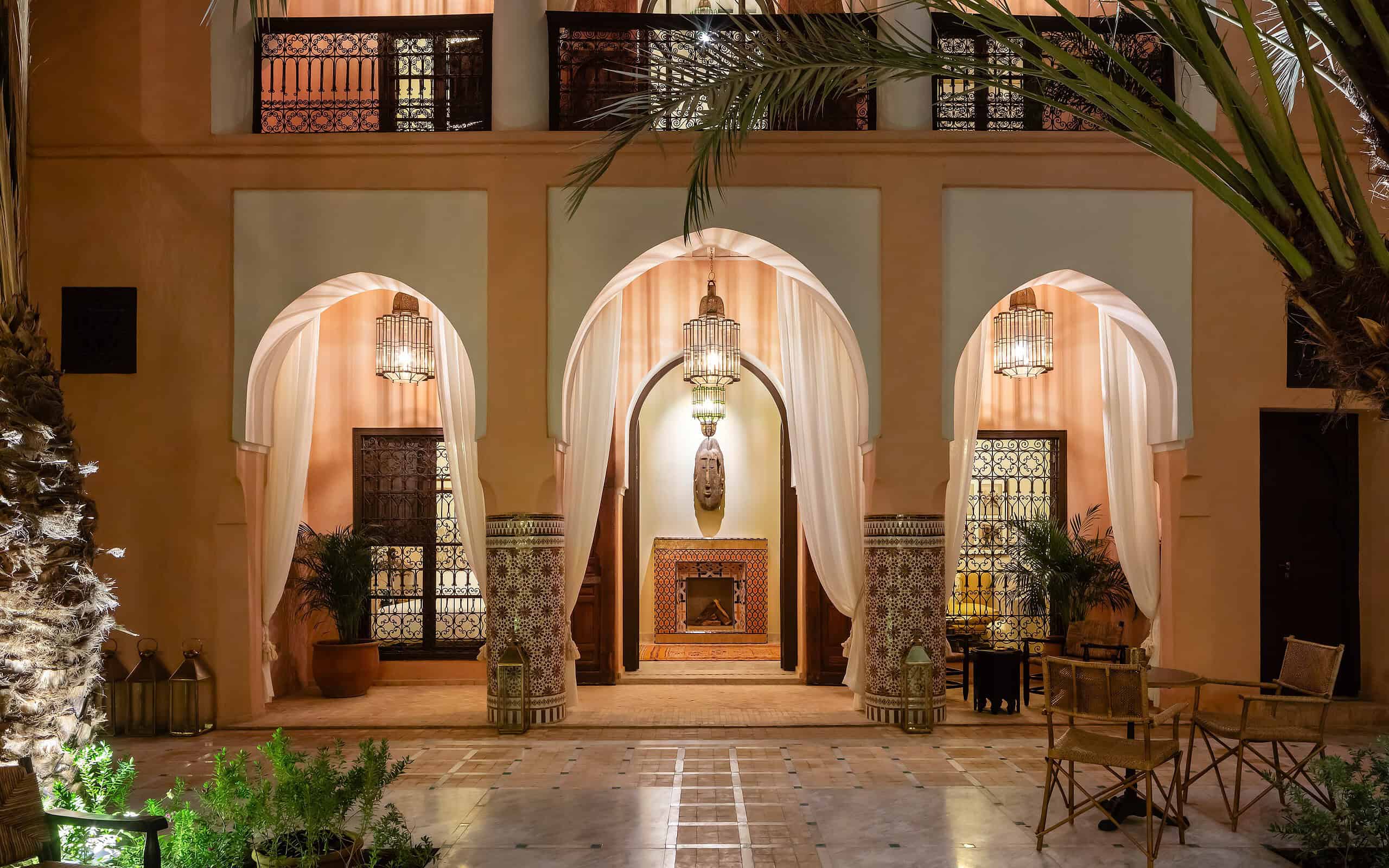
As with everything in life, balance is key. Balance, specifically, in finding a great escape that still authentically captures the contrasts of Morocco’s most cosmopolitan city. Dar Al Dall defines that balance better than most. Down a winding alleyway, steps from a famous local hammam, an inconspicuous door opens onto its tastefully considered interior. We are ushered straight to plush sofas, served fresh mint tea and French-inspired Moroccan pastries, and the city immediately falls away.
Heritage rooms with a contemporary soul
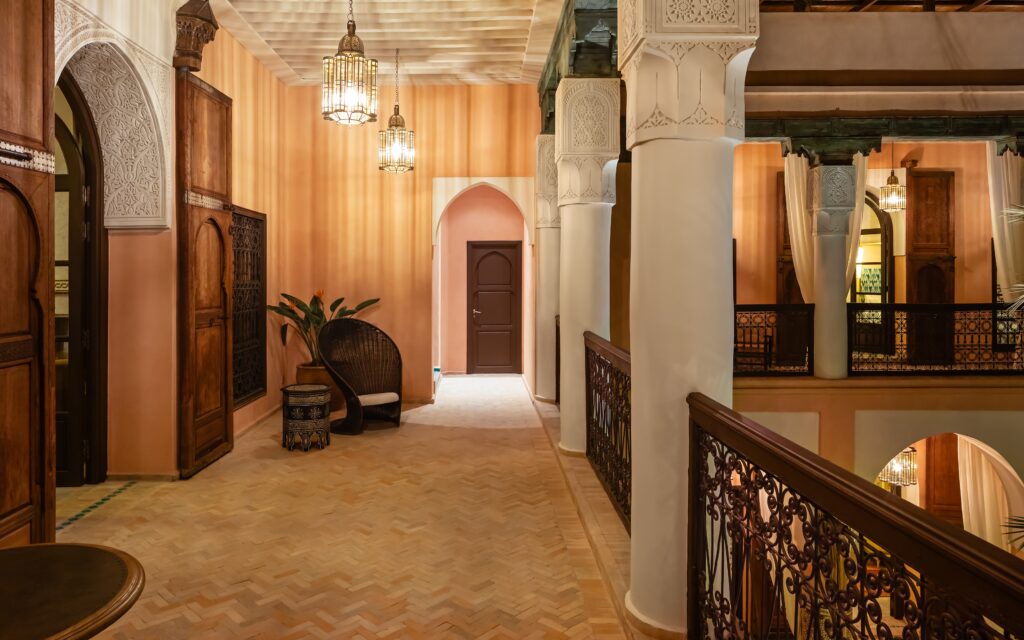
Dar Al Dall is one of the most carefully preserved properties in Marrakesh’s medina, and it shows at every level. The owners – luxury travel group This Time Tomorrow – undertook a seven-year restoration alongside Barcelona-based interior designer Recdi8 and Marrakesh architectural firm Trab Design. The brief was to preserve the riad’s legacy while weaving a new narrative: one honouring Moroccan artisanry while embracing a contemporary Iberian sensibility. The result is a home that feels at both ancient and alive.
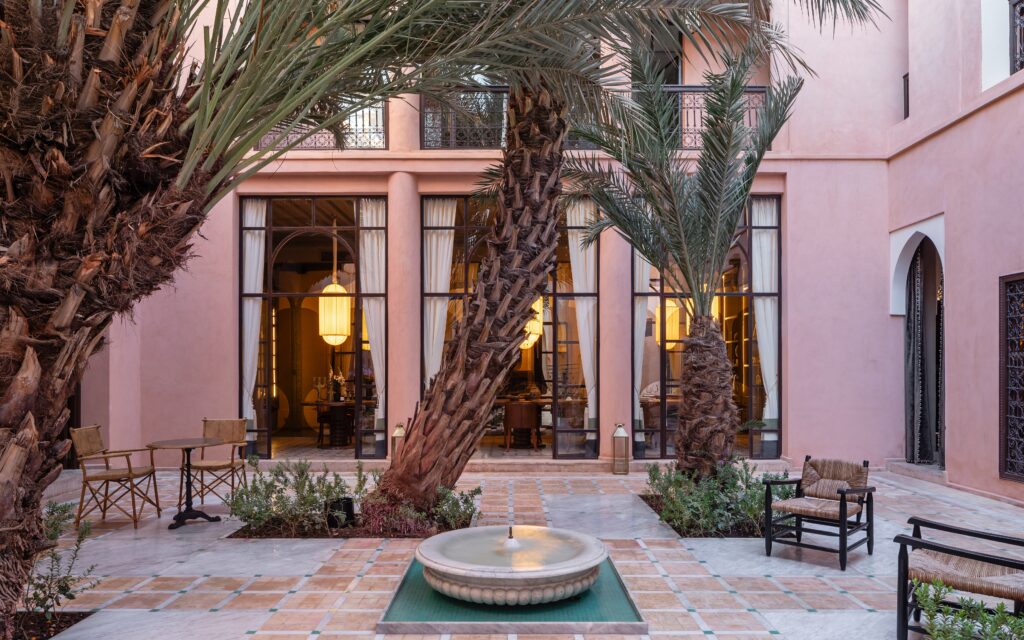
With just five expansive suites spread across the property, Dar Al Dall aims for intimacy and exclusivity without any air of pretension. We were placed in Iming, the grandest of all – a first-floor suite with traditional carved wooden doors that open onto a terrace facing the riad’s serene courtyard. Below, twin fountains tempt sparrows down from the eaves and grand palms cast long shadows across the tilework. The name, it turns out, is apt: Dar Al Dall translates as House of Shadows.
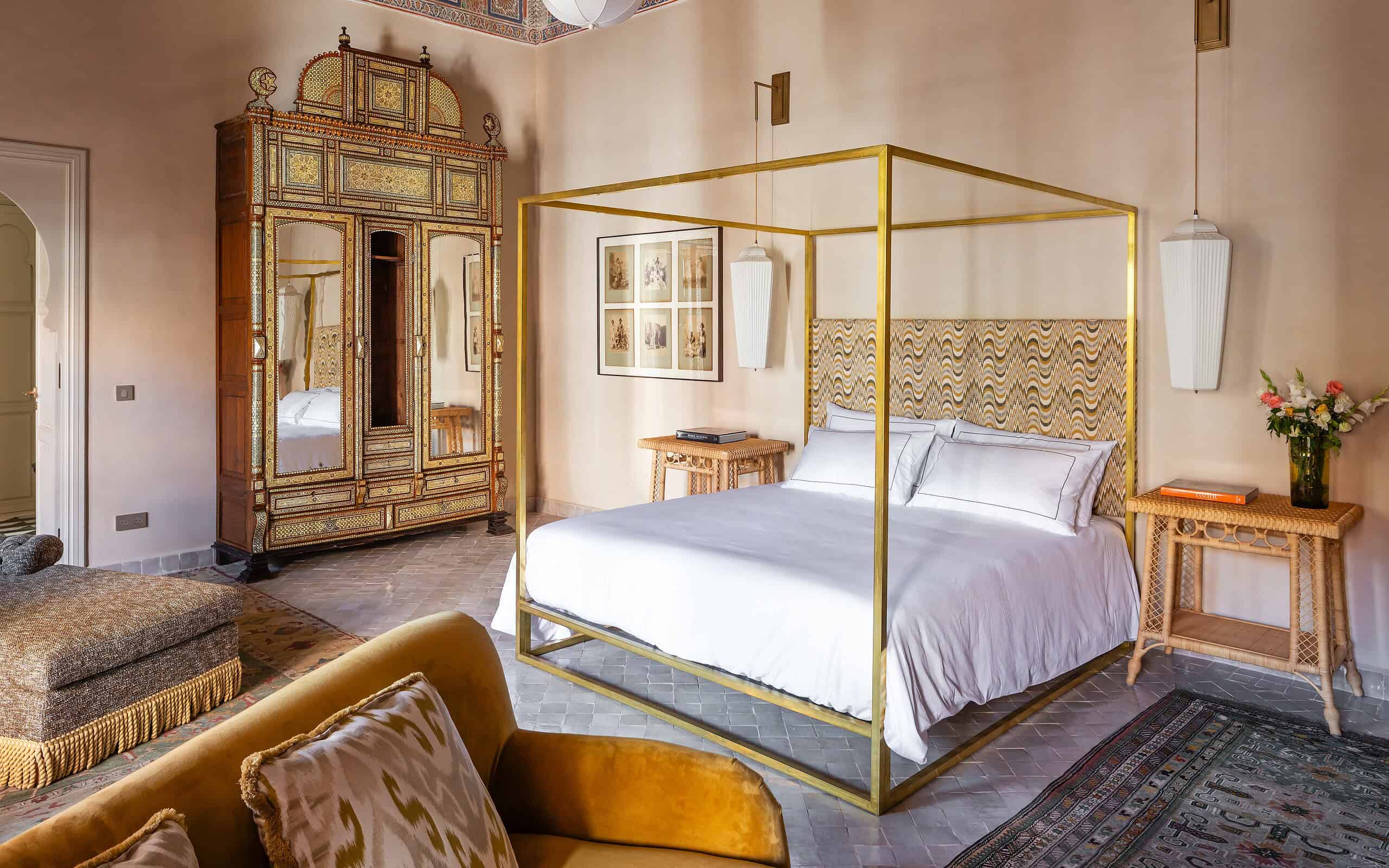
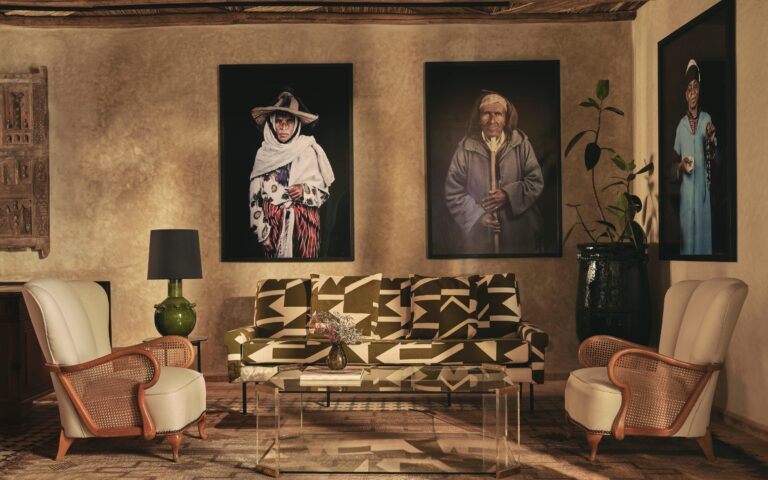
The room itself is beautifully composed: a four-poster bed, antique wardrobe, a working fireplace, and a frescoed ceiling painstakingly retained from the riad’s original life. Each element – the reupholstered furnishings in traditional fabrics, the refurbished antiques, the 19th-century photographs adorning the walls – speaks to a curatorial eye rare in even the most considered hotels. Double air-conditioning and a plush velvet sofa become essential when temperatures climb past 40 degrees on a summer afternoon.
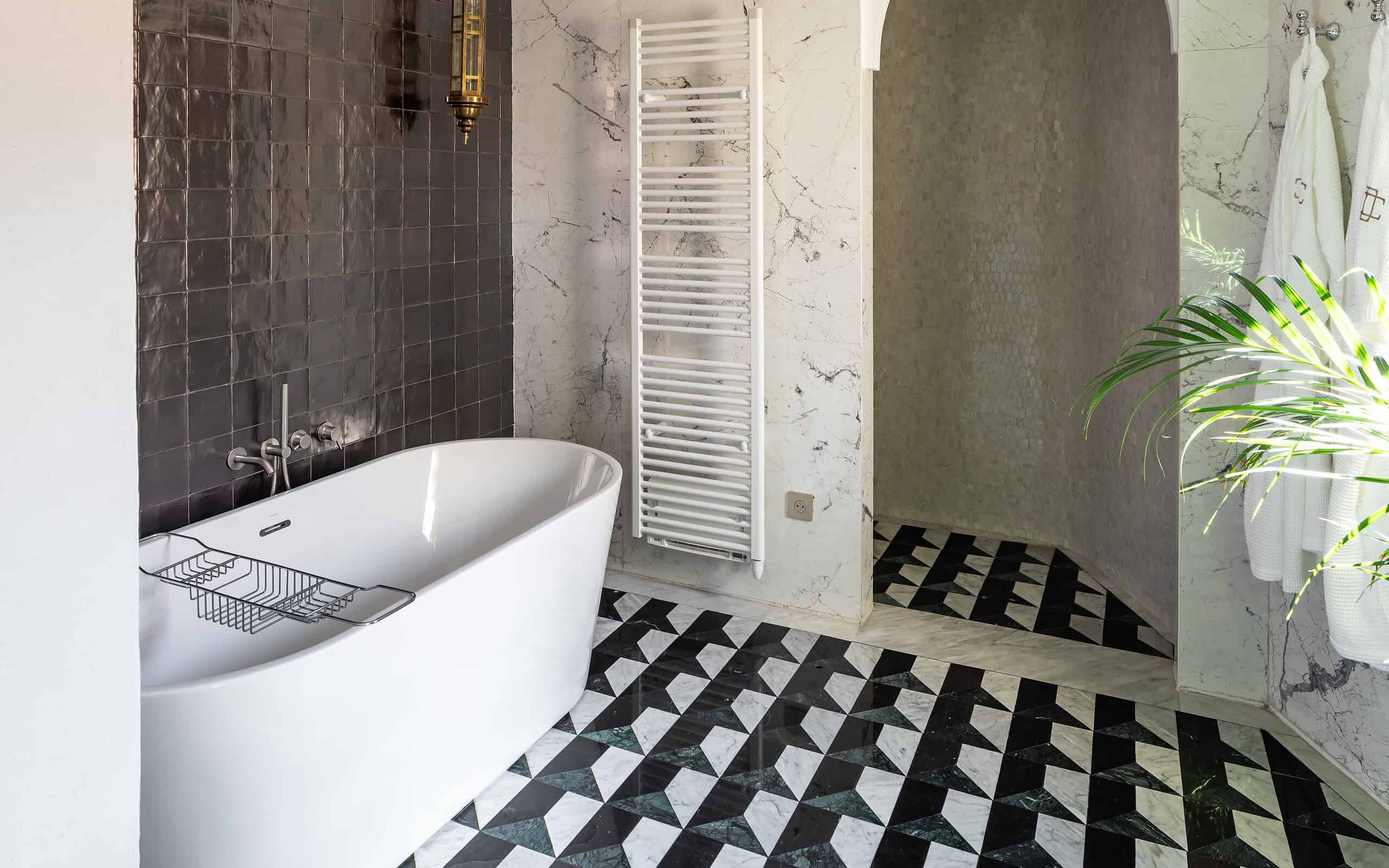
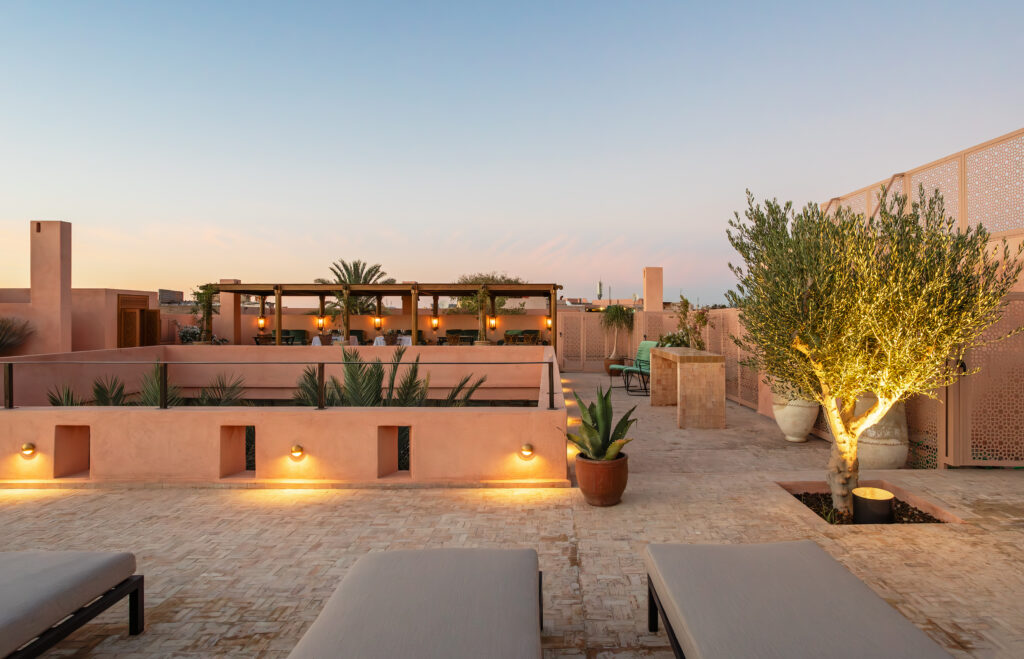
The bathroom is a place for genuine rejuvenation: marble walls, chequered tiled floors, and a spacious freestanding tub preceded by a traditional Moroccan rub – applied, soaked for fifteen minutes, rinsed, and then surrendered to. Beyond the suite, the rooftop terrace is the finest common ground: sweeping views across the medina, sunbeds for the late afternoon, shaded corners well-suited to sundowners, and a pool currently in the works.
Slow food and a spa that restores
For visitors to Marrakesh, restaurants can often disappoint. Moroccans traditionally eat their finest food at home – who, after all, can compete with a grandmother’s kitchen? – and many local eateries inevitably cater to tourist expectations, producing dishes that feel flattened and homogenous. Dar Al Dall’s response to this is innovative: it brings a homestyle sensibility to its culinary offering without sacrificing any sense of occasion.
Breakfast is laid out on the terrace each morning, staff hawk-eared to your movements and silently preparing the shaded setting overlooking the medina before you’ve quite gathered your thoughts. The menu shifts daily according to available produce, but expect Moroccan staples at their most considered: spicy baked eggs with strips of cured meat, fresh fruit, homemade yoghurt, and locally roasted coffee in a French press.
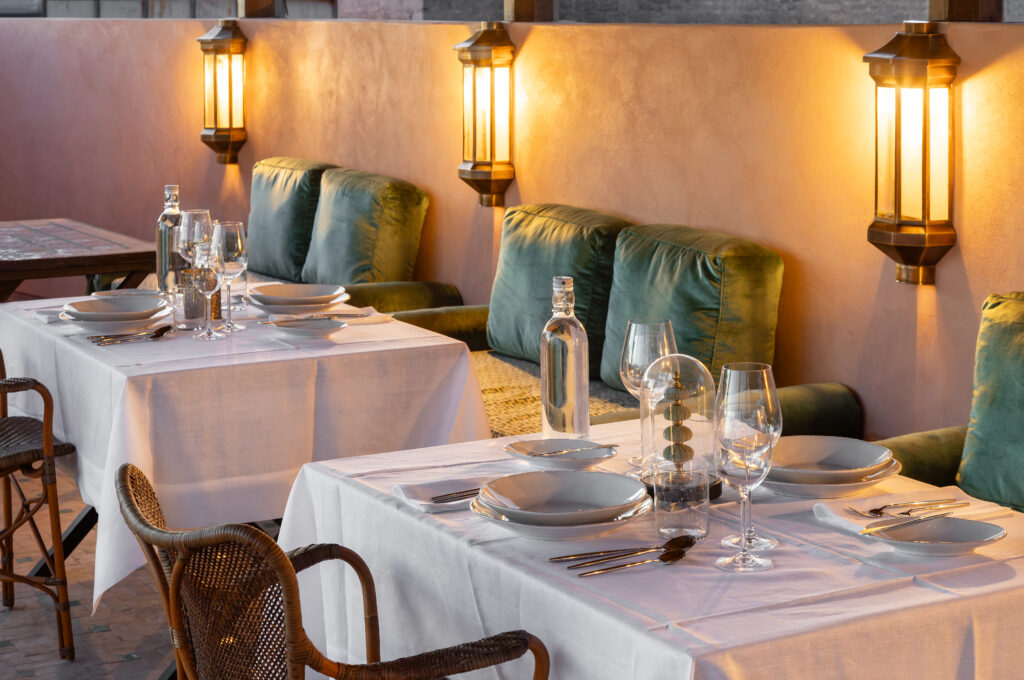
Dinner is currently offered exclusively to hotel guests with advance notice, though they’re deliberating expanding to outside visitors, and they would be well advised to. Our first evening moved through elevated interpretations of traditional staples: courgettes with almonds; zaalouk of cauliflower in tomato and garlic; Turkish occe, which is fried onion stuffed with mint and feta; a main of seffa, roasted chicken laid over steamed vermicelli, followed by a delicately light orange cake that closed the meal without overwhelming it.
The second night was more memorable still. Preparations had begun that morning for a traditional tanjia, sometimes called the bachelor’s stew for its beautiful simplicity, a dish historically prepared by men cooking alone, without the elaborate labour of a full kitchen. We took an active hand: tender lamb packed into a clay vessel with preserved lemon, garlic, cumin, saffron and olive oil, sealed and carried down the alley to the neighbourhood hammam, where it slow-cooked all day in the furnace fires that heat the bathhouse. By evening, the meat had absorbed every note of the marinade and collapsed at the touch of a fork – one of those dishes that reframes what ‘flavour’ means.
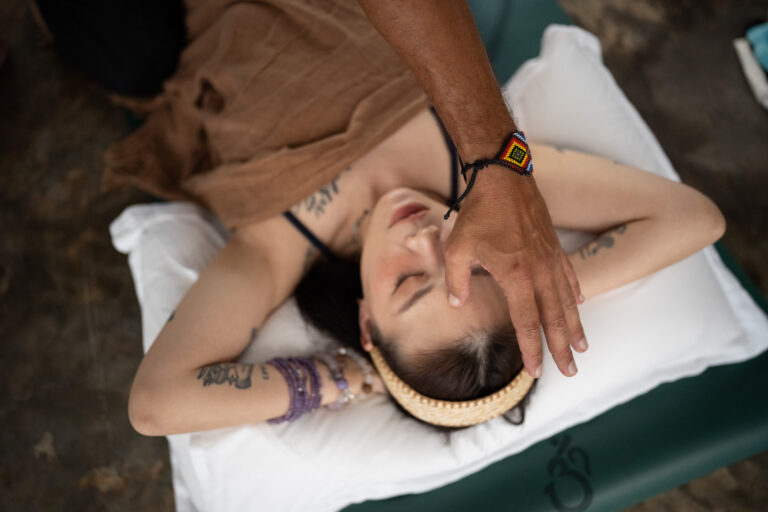
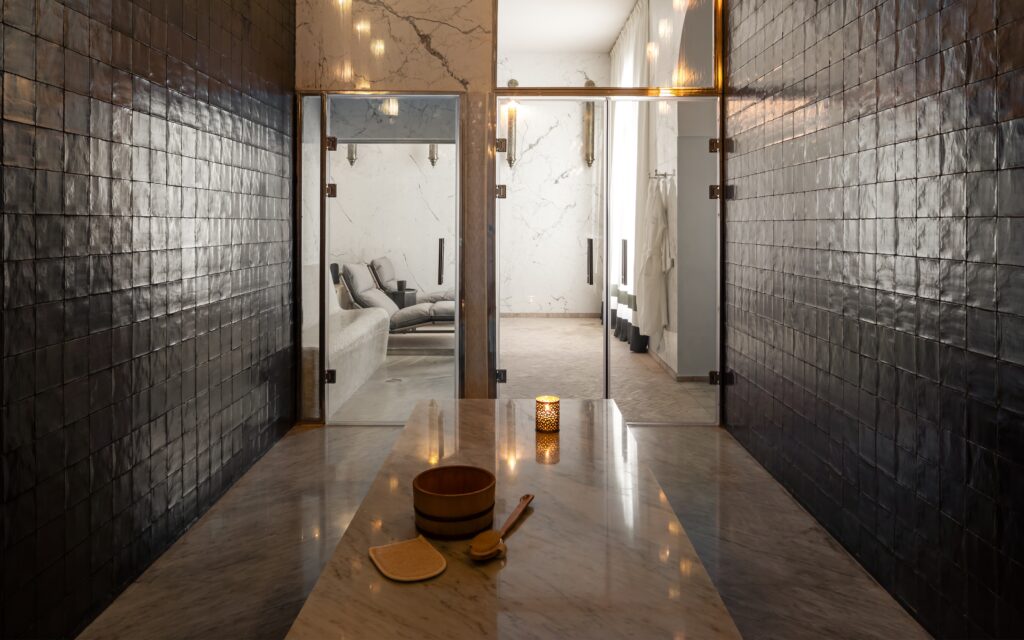
A word on hammams, for the uninitiated: the traditional bathhouse experience, in its rawer local form, involves therapists who scrub the skin with a vigour that can border on alarming. Dar Al Dall’s own hammam takes a more considered approach – a private spa with beautifully appointed bathing rooms, and a menu of treatments from facials to foot massages, all within the riad’s walls. Restorative rather than bracing.
Why it matters
Attention to detail is everything in a great hotel, and in that, Dar Al Dall excels. What This Time Tomorrow has built here goes beyond a well-restored property: each guest receives a bespoke itinerary crafted in advance by a resident curator, who draws on a network of local contacts to offer genuinely off-menu experiences: an afternoon with a spice merchant, an analogue photography walk, or just rooftop cocktails at French-inspired bar.
In a place like Marrakesh, where confusion and unpredictability are simultaneously its greatest charm and its most exhausting quality, Dar Al Dall is a property that anticipates your needs before you’ve thought to articulate them. That, in a city of a thousand riads, is the rarest thing it could offer.