Seven private chambers, generations of aristocratic history, and a black marble pool tucked deep within Fez’s medina walls.
Marrakesh claims the spotlight, but Fez holds something older and less negotiable. While its southern rival has spent decades courting international glamour, this northern capital has stayed resolutely itself – the country’s intellectual and spiritual anchor, a warren of medieval alleys where donkey carts still navigate the largest car-free old town on earth.
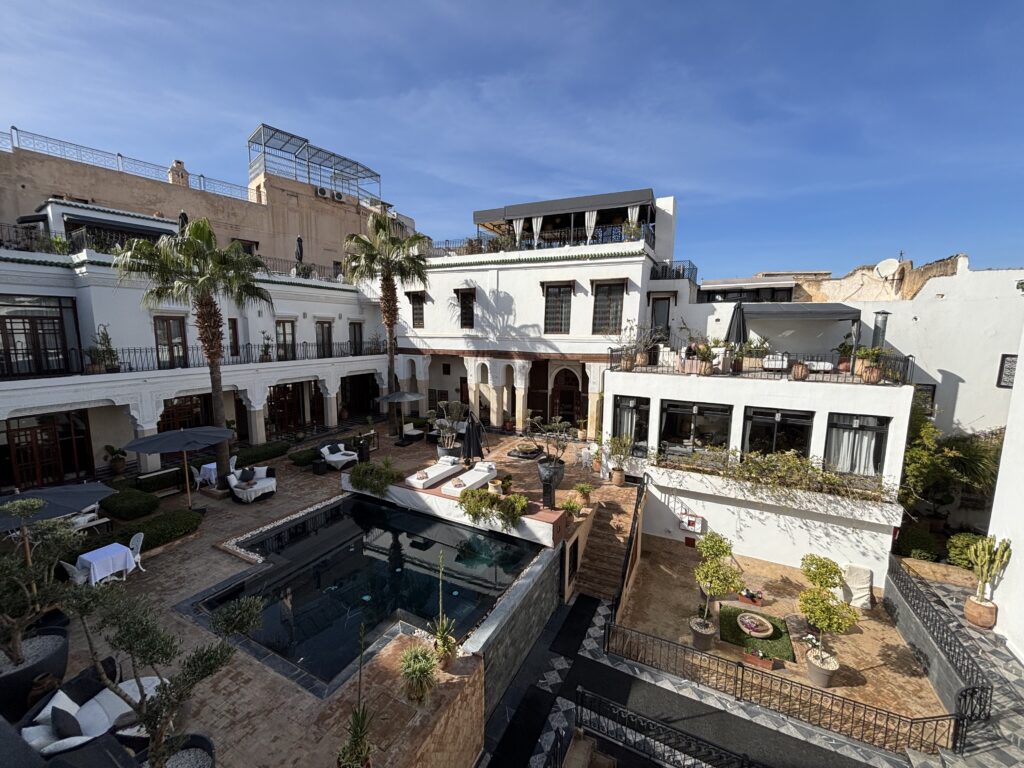
Walking through the doors of Riad Mayfez confirms exactly that shift. Built in 1875 for a vizier, the residence later belonged to Lalla Tam Tazi, a widow who defied convention by keeping the estate running long after her husband died. Years of disrepair followed, until the Laraqui Houssaïni family took on a years-long restoration. Rather than gutting the palace for a conventional hotel layout, they held onto its original scale, shaping a faded noble home into a private retreat with only seven rooms.
Silk Road echoes and six-metre ceilings
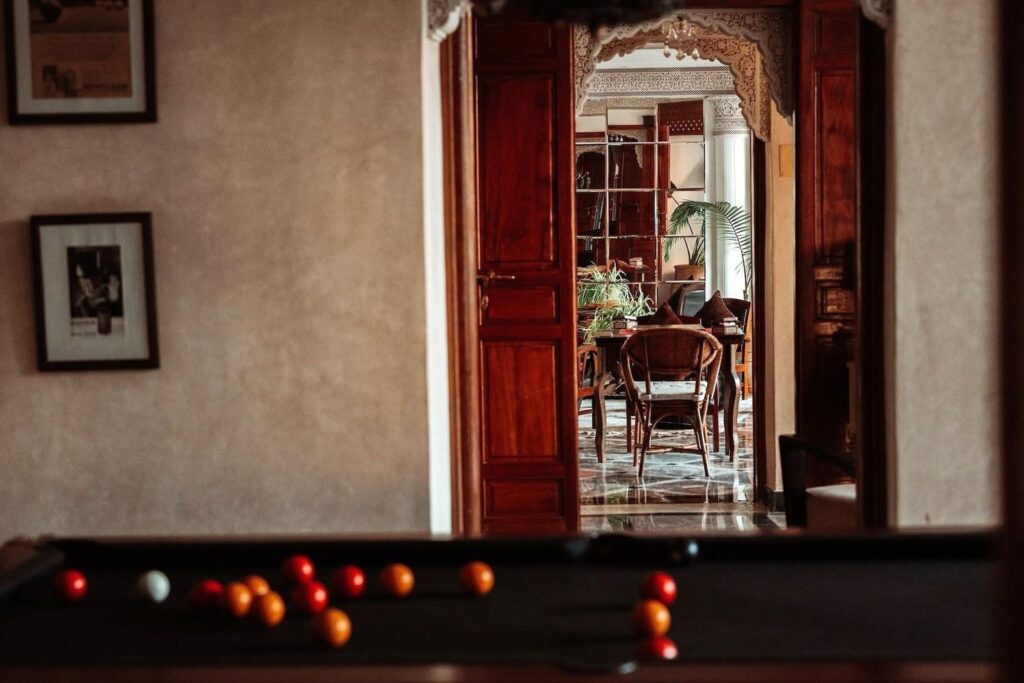
What results feels far removed from typical hospitality: grand in scale, yet unmistakably personal. The layout dispenses with anything resembling a standard hotel corridor, instead offering sweeping staircases, tucked-away corners, and open-air terraces that look straight out over the medina.
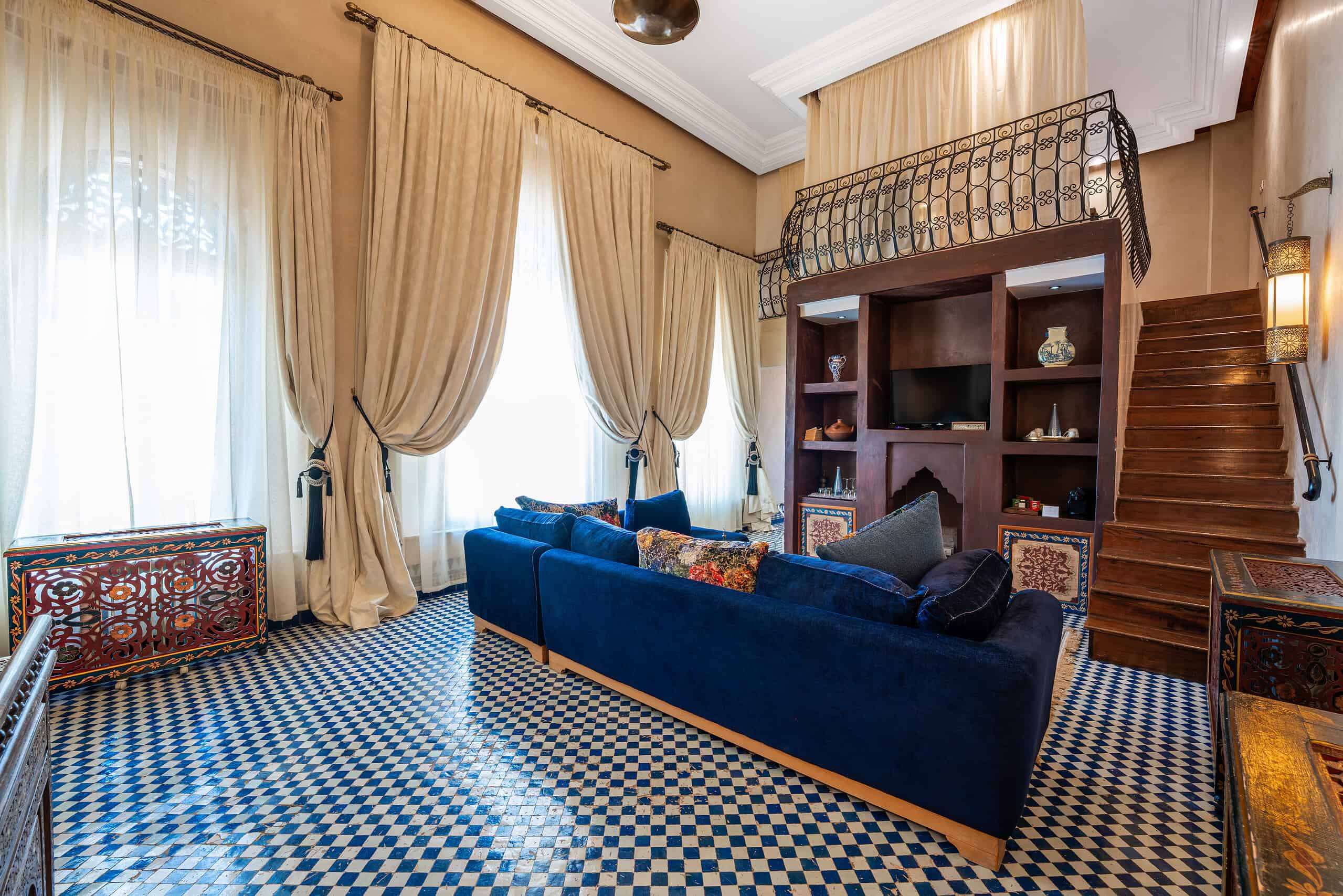
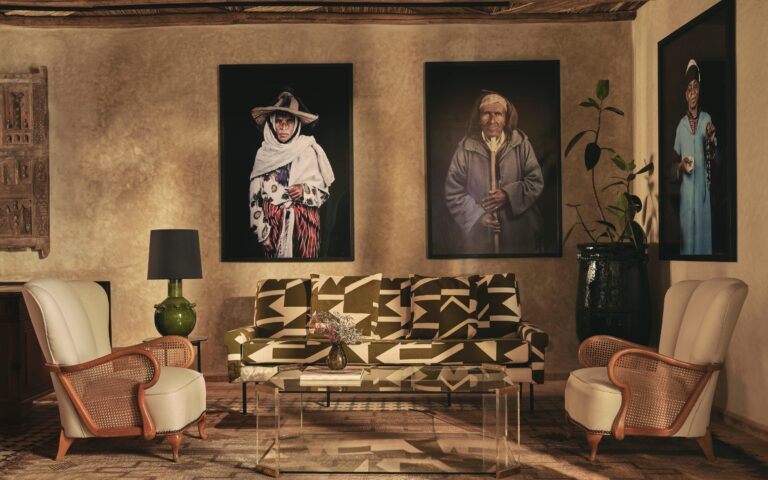
We stayed in the Royal Suite Isfahan, an 80-square-metre first-floor space. Six-metre ceilings pull the eye toward hand-painted woodwork and gilded flourishes drawn from the ornamental language of the old Silk Road trading halls. Underfoot, traditional tilework gives way gradually to warm, worn timber.
A blue L-shaped sofa anchors the main room, set among antique pieces and artwork of the home’s noble past. Tall windows flood the space with light, catching silk drapery and carved plaster detail. A private staircase climbs to a mezzanine sleeping loft, where a queen bed sits beneath fine linens, with a small fireplace nearby.
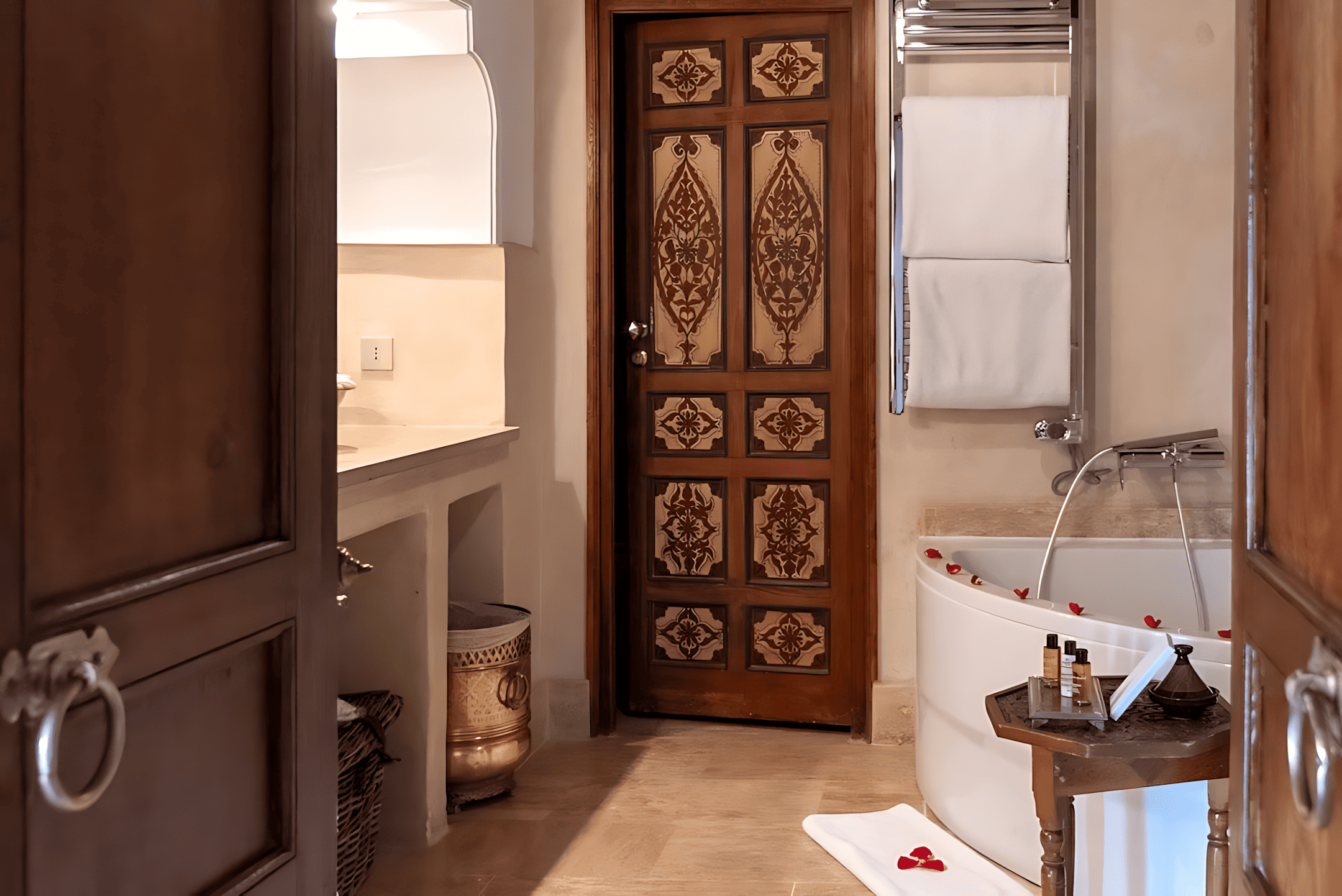
The bathroom holds its own against the rest of the suite: twin stone-carved sinks, a jacuzzi bathtub, a separate walk-in shower, and a generous corner whirlpool tub made for washing off a day spent wandering the souks. A 25-square-metre private terrace completes the suite, framing views straight down over the courtyard pool and out across the terracotta rooftops beyond.
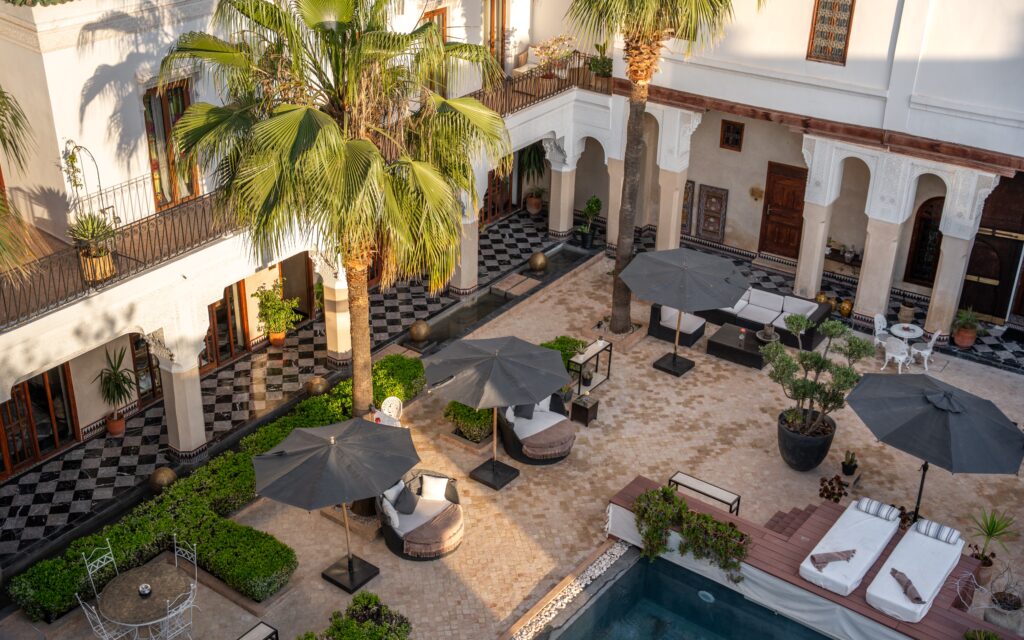
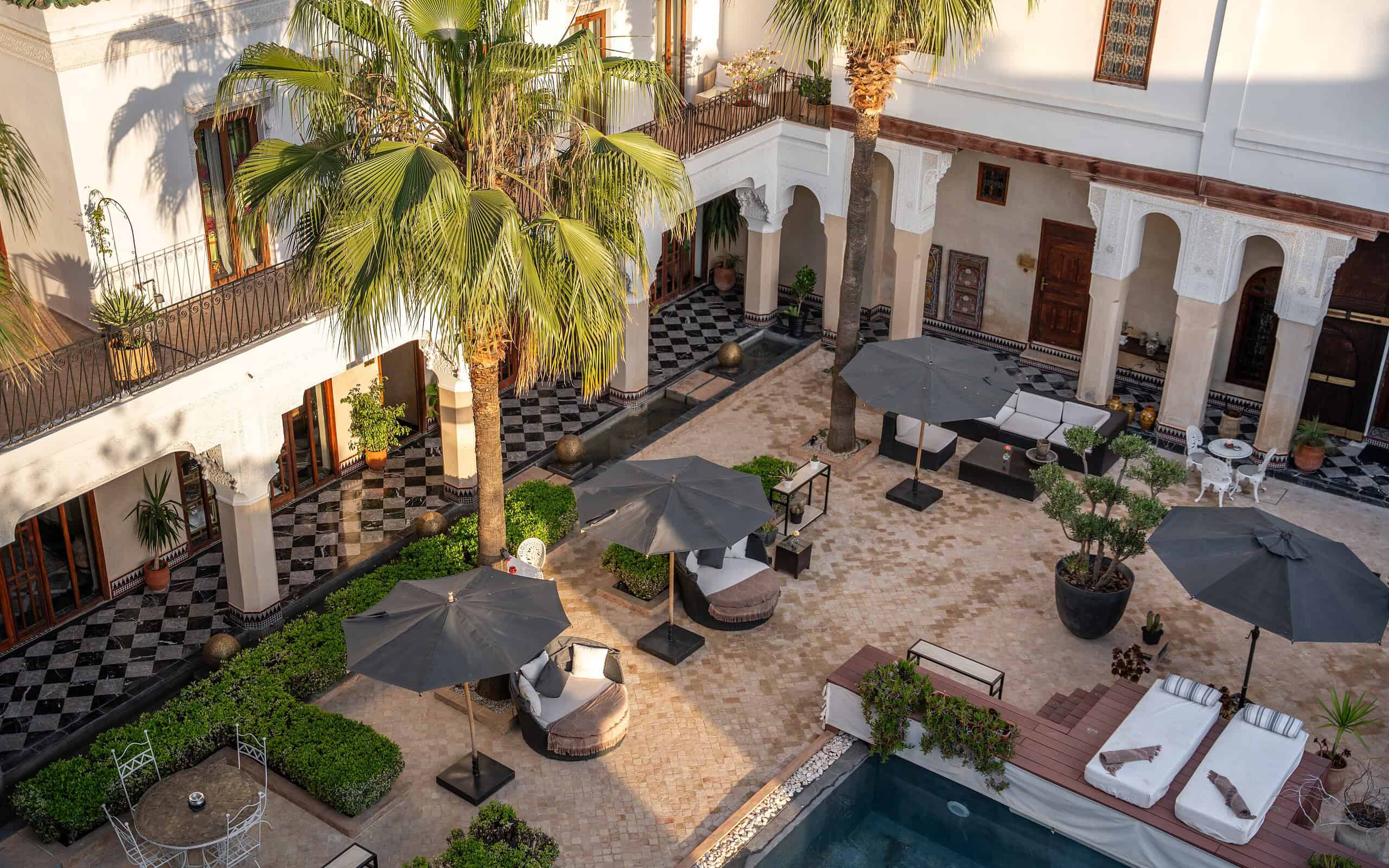
Beyond the suite, the sprawling property’s courtyards, shaded corners and communal spaces — sofas deep enough to disappear into, a serene lap pool sitting next to the cocktail bar – invite aimless, pleasurable wandering that a great hotel should encourage.
Black marble pools and evening dining
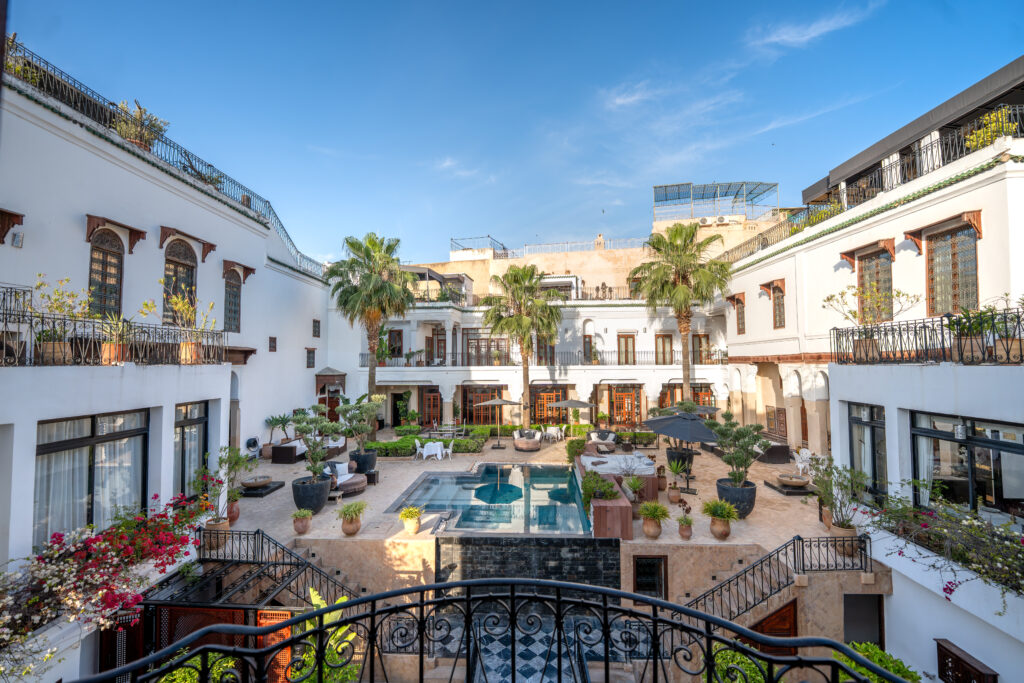
Beyond the suite lies the property’s true canter of gravity. The central courtyard offers real relief from the density of the medina outside, built around a heated black marble pool set on the very spot where a 19th-century fountain once fed water to the estate’s orchards. Palms lean in overhead, and shaded corners invite the kind of lounging that has nowhere else to be.
Dinner leans into old customs. Our evening began with harira, thick and fragrant, served alongside boiled eggs and dates, before moving into spiced salads and a hearty royal couscous. Breakfast was equally leisurely, à la carte spread of homemade jams, fresh pastries, seasonal fruit, and regional specialties, built for guests with no reason to hurry.
Why it matters
Riad Mayfez deals in a different currency of luxury: restrain, and a sense of inheritance rather than spectacle. For travellers looking to encounter Fes without the trappings of a standard resort script, this restored palace offers something closer to a passage into another century than a typical stay.