In Dumfries & Galloway, whiskey lore lives on at the revamped The Globe Inn and Annandale Distillery.
The story of today’s Annandale Distillery began with a book and ended with a £10.5 million restoration. Professor David Thomson, a Dumfries-born sensory scientist, entrepreneur, and whisky devotee, was reading Scotch Missed: Lost Distilleries of Scotland when he came across a distillery he had never heard of, right in his own hometown, founded in 1836 but now shuttered for more than 90 years.
Thomson was even more surprised to find that the buildings were still standing; if slowly reverting to woodland. It was called Annandale, and it had been hiding in plain sight, eight miles north of the English border in Dumfries & Galloway.
Thomson of course knew what he had to do.
“Did Scotland need another single malt distillery?” he asked himself. “Possibly not. But did the South of Scotland need one? Absolutely.”
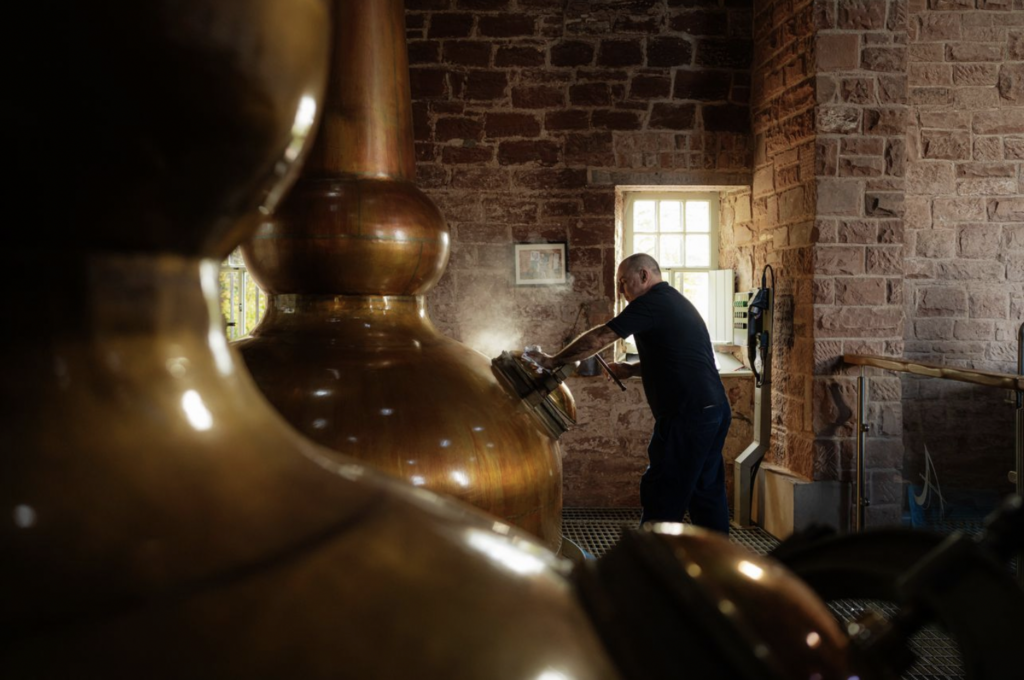
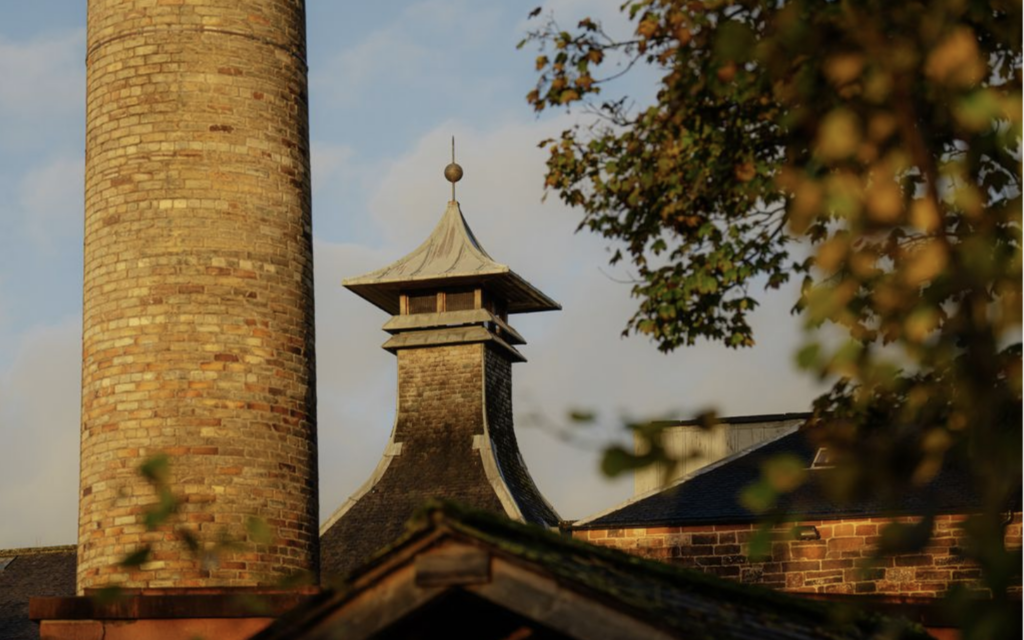
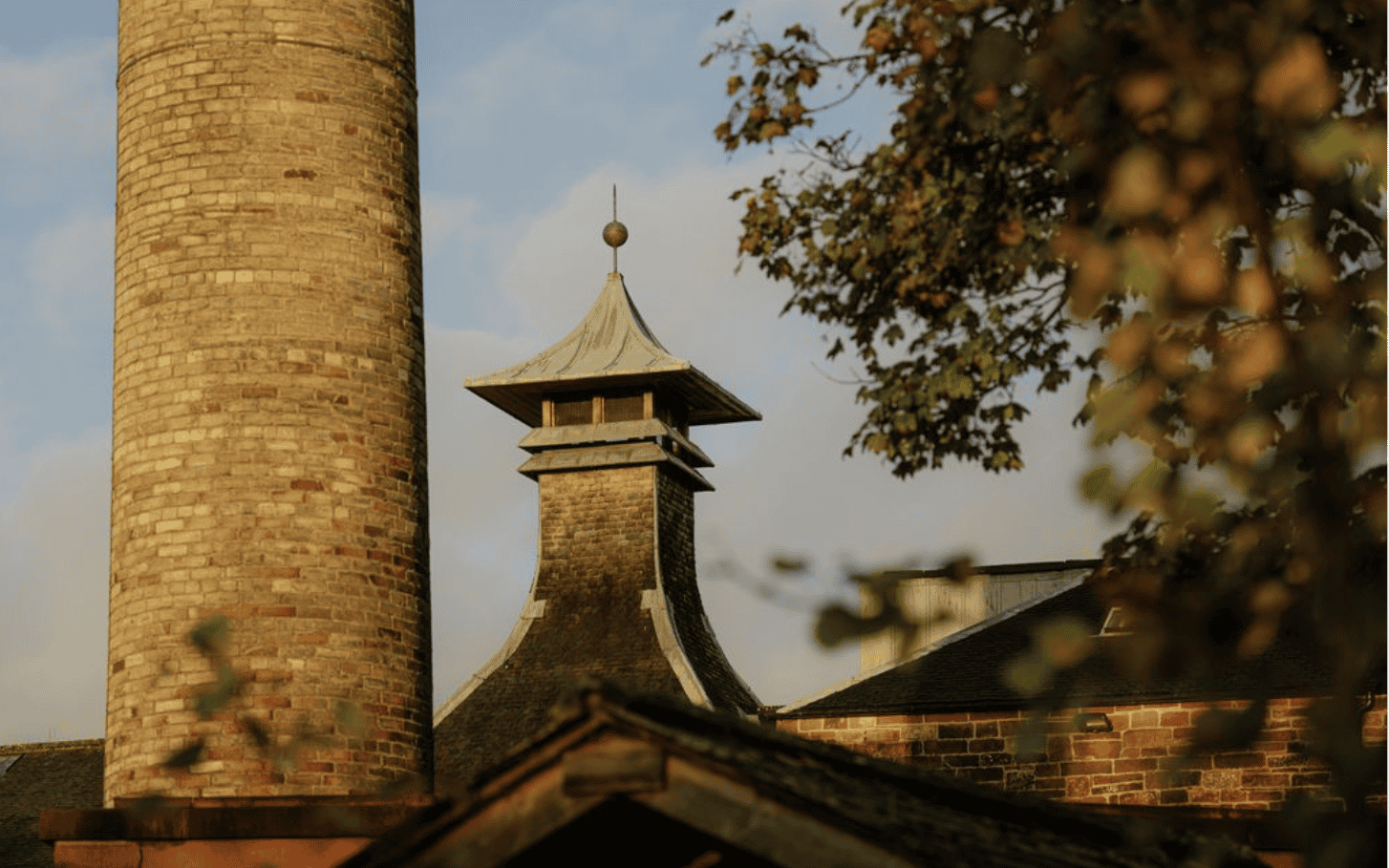
What followed was a seven-year meticulous, research-led restoration. Thomson’s wife and business partner, architect Teresa Church led the conservation using original local pink sandstone and slate, preserving rare features including one of the few remaining Charles Doig-designed pagoda roofs in Scotland. Thomson, also founder of MMR Group, a global sensory research firm, turned his attention to flavour: mapping the landscape of Scottish single malt to carve out a distinctive space for Annandale, a quality he came to call Annandaleness.
They also enlisted their long-time friend Dr Jim Swan, nicknamed the “Einstein of Whisky”, who designed twin copper stills engineered specifically to maximise copper contact and coax the distillery’s desired orchard-fruit character. Swan guided the first new distillation when Annandale reopened in 2014. His influence endures in every bottle.
Today, Annandale produces two core expressions, each named after a luminary of Dumfries & Galloway. Man O’Sword, the peated whisky, honours Robert the Bruce, 7th Lord of Annandale: robust but elegant, with smouldering peat giving way to sweet orchard fruit, vanilla and toffee. Man O’Words, the unpeated expression, is named for Robert Burns, who spent his most productive years in Dumfries: light, fruit-forward and complex, with notes of stewed apple, pear, coconut and soft toffee. Both are bottled from a single cask, at cask strength, with no blending, colouring or chill filtration.
“With a single cask, there’s nowhere to hide,” Thomson says. “You need a refined, characterful spirit, incredible quality wood, and a lot of patience.”They have become something of an obsession for Thomson. And though rare on the whisky market generally, it is the only type of whisky that Annandale produces.
The results speak for themselves. Recent releases include a pair of ten-year-old expressions matured in first-fill ex-Bourbon casks from Buffalo Trace Distillery – the Man O’Words yielding honeyed fruit and creamy vanilla. The Man O’Sword offering subtle woodsmoke against bright Granny Smith apple, alongside sherry cask expressions matured in Fino and Oloroso casks sourced from the same legendary bodega that supplies The Macallan and Glenfarclas. Each bottling is a limited, unrepeatable release. When a cask is gone, it’s gone.
The distillery now welcomes more than 50,000 visitors a year, but for those who want to understand what Thomson and Church are really building in Dumfries & Galloway, a visit to The Globe Inn pub is essential. Built in 1610 and immortalised as ‘the Bard’ Robert Burns’ “favourite howff” – the Scots word for a beloved gathering place – The Globe Inn was acquired by the couple in 2018 when it faced an uncertain future.
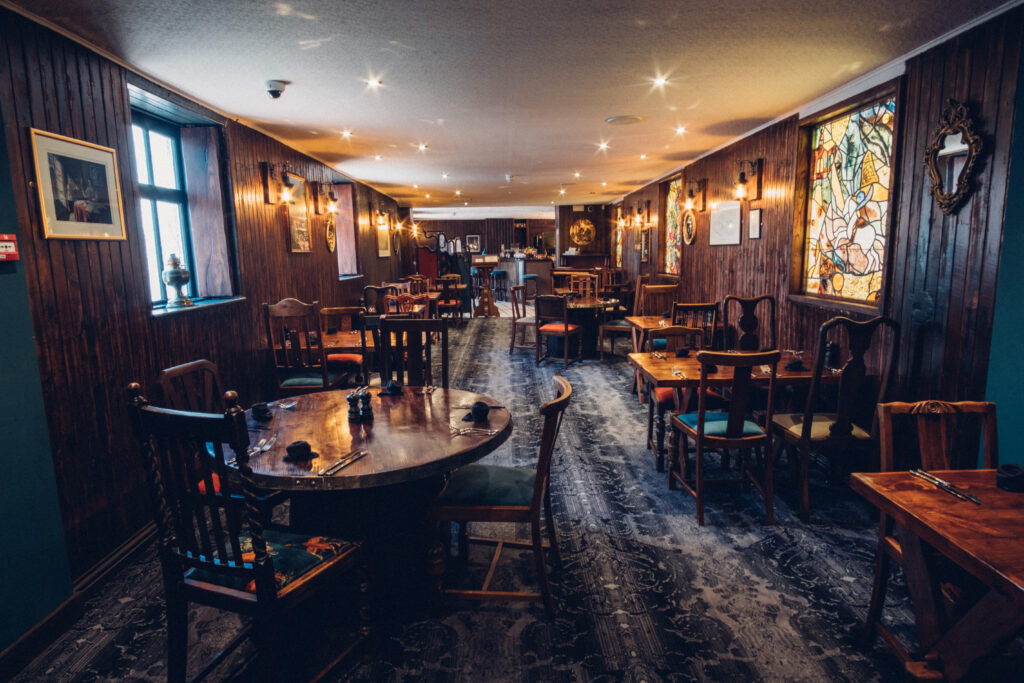
The restoration that followed applied the same philosophy as Annandale: research-led, conservation-first, resolutely anti-Disneyification. Burns’ rooms, artefacts, and poetry etched into windowpanes were preserved with care. The aim was never to sanitise the place but to let it breathe.
The bar’s whisky collection quickly ballooned to more than 300 distinct offerings and now offers the largest collection of single-cask whiskies in Scotland.
Within that ancient local framework sits 1610 at The Globe Inn, a fine-dining restaurant that has earned its own Michelin listing. Led by award-winning Head Chef Fraser Cameron, the kitchen draws ingredients from the kitchen garden at Comlongon Estate, also owned by Thomson and Church, and from trusted local producers across the region. The food is traditional, precise, and rooted in provenance: the same principles that shape every cask selection at the distillery across town.
Taken together, Annandale, The Globe Inn and 1610 amount to something rarer than a good whisky or a good restaurant. They represent a coherent vision of custodianship: the idea that remarkable places, once saved, should be tended to, honoured rather than repackaged. “We see ourselves not as owners,” Thomson and Church have said, “but as caretakers, of flavour, buildings, stories and landscape.”
For the whisky lover willing to venture south of the Highland crowds and off the beaten track, Dumfries & Galloway offers something genuinely unexpected: a region reclaiming its rightful place in Scotland’s cultural and culinary story, one single cask at a time.