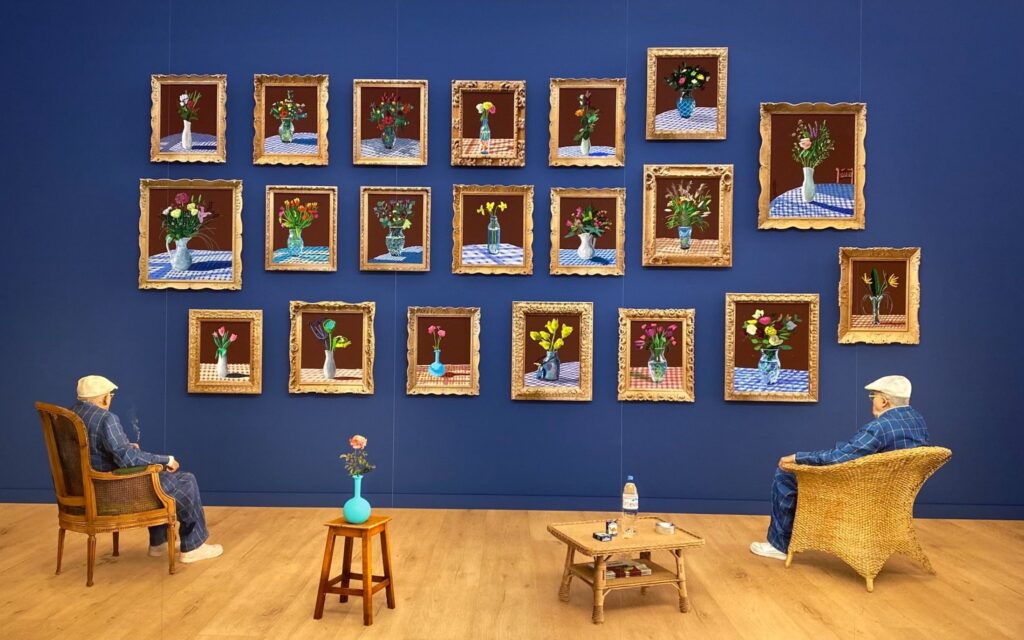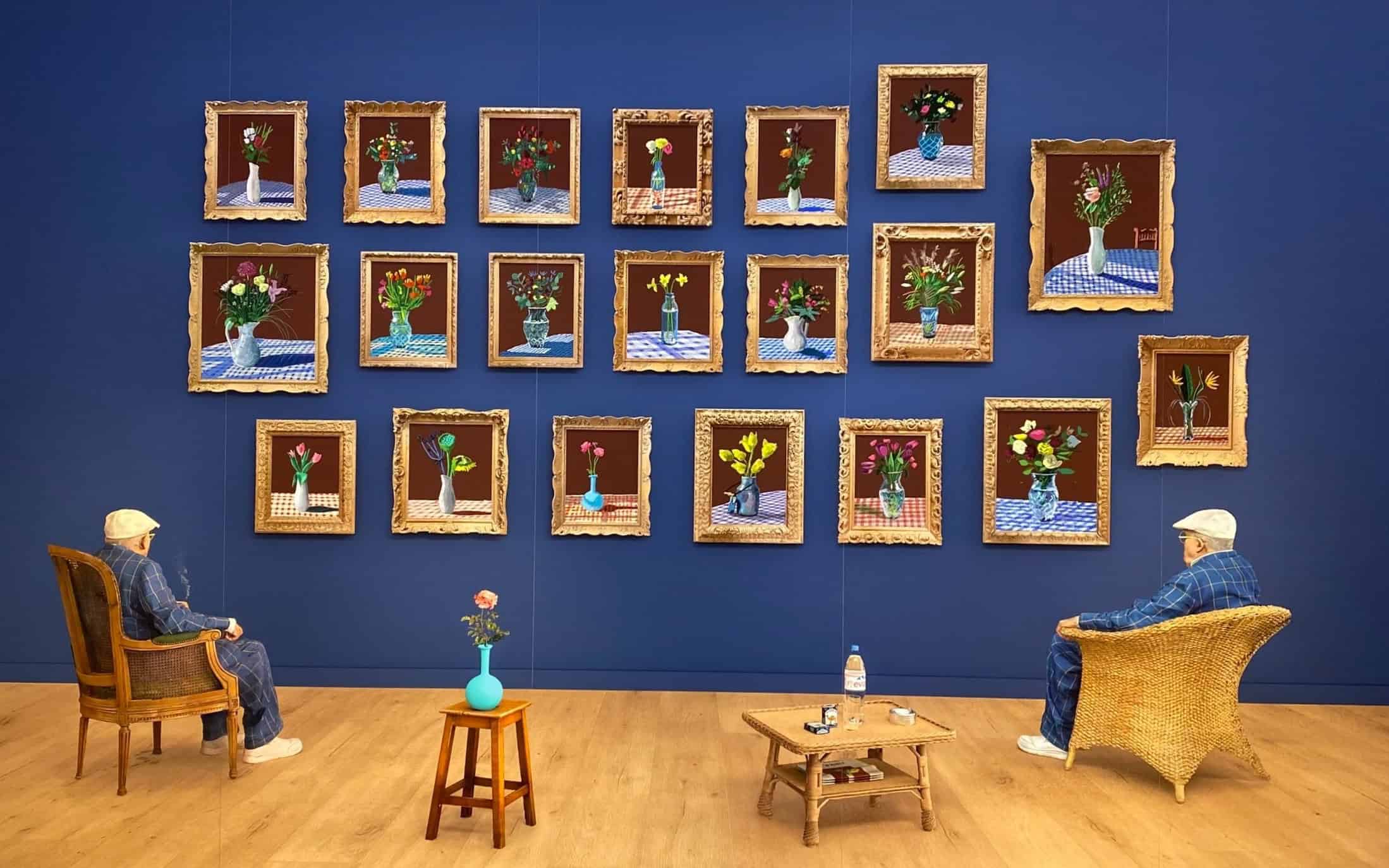
A major Portland exhibition of David Hockney’s work, on view through July 26, 2026, offers a timely reflection on the British artist’s lifelong fascination with perception, memory and freedom following his death at age 88.
The death of celebrated British artist David Hockney on June 11 marked the end of one of the most influential careers in modern art. And in Portland, Oregon, where a major exhibition of his work remains on view at the Portland Museum of Art through to July 26, audiences have the timely opportunity to view the works of an art legend who never stopped evolving.
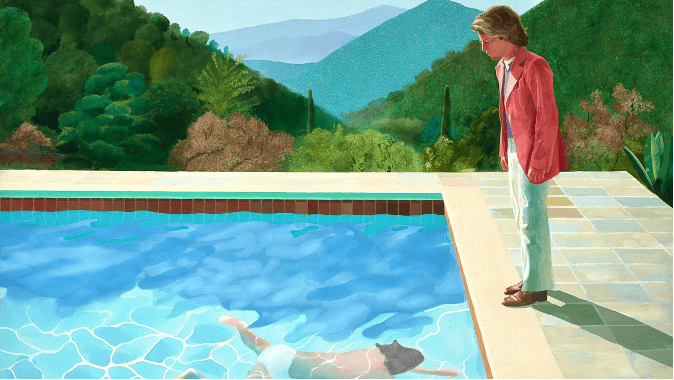
For many, Hockney’s name invokes images of Californian Americana. Deep shadows cast by everlasting sunshine, the cool azure geometry of swimming pools, and slow afternoons unfolding in suburban Los Angeles. Yet beyond the instantly recognisable aesthetic was an artist deeply preoccupied with perception itself: how people see, remember and experience the world around them.
Born in England in 1937, Hockney emerged from post-war U.K. and studied at the Royal College of Art before relocating to Los Angeles in the 1960s. As a gay man who came of age at a time when homosexuality remained criminalised in Britain, California also offered a space in which he could live openly and build a life on his own terms. That sense of liberation would shape not only his subject matter but also his willingness to experiment.
Although his works are often associated with Pop Art, Hockney’s practice has resisted categorisation. Across six decades, Hockney moved fluidly between painting, drawing, printmaking, photography, stage design and, later, digital technologies. His colourful works often feel deceptively simple, but beneath that clarity lies a deeper inquiry into time, memory.
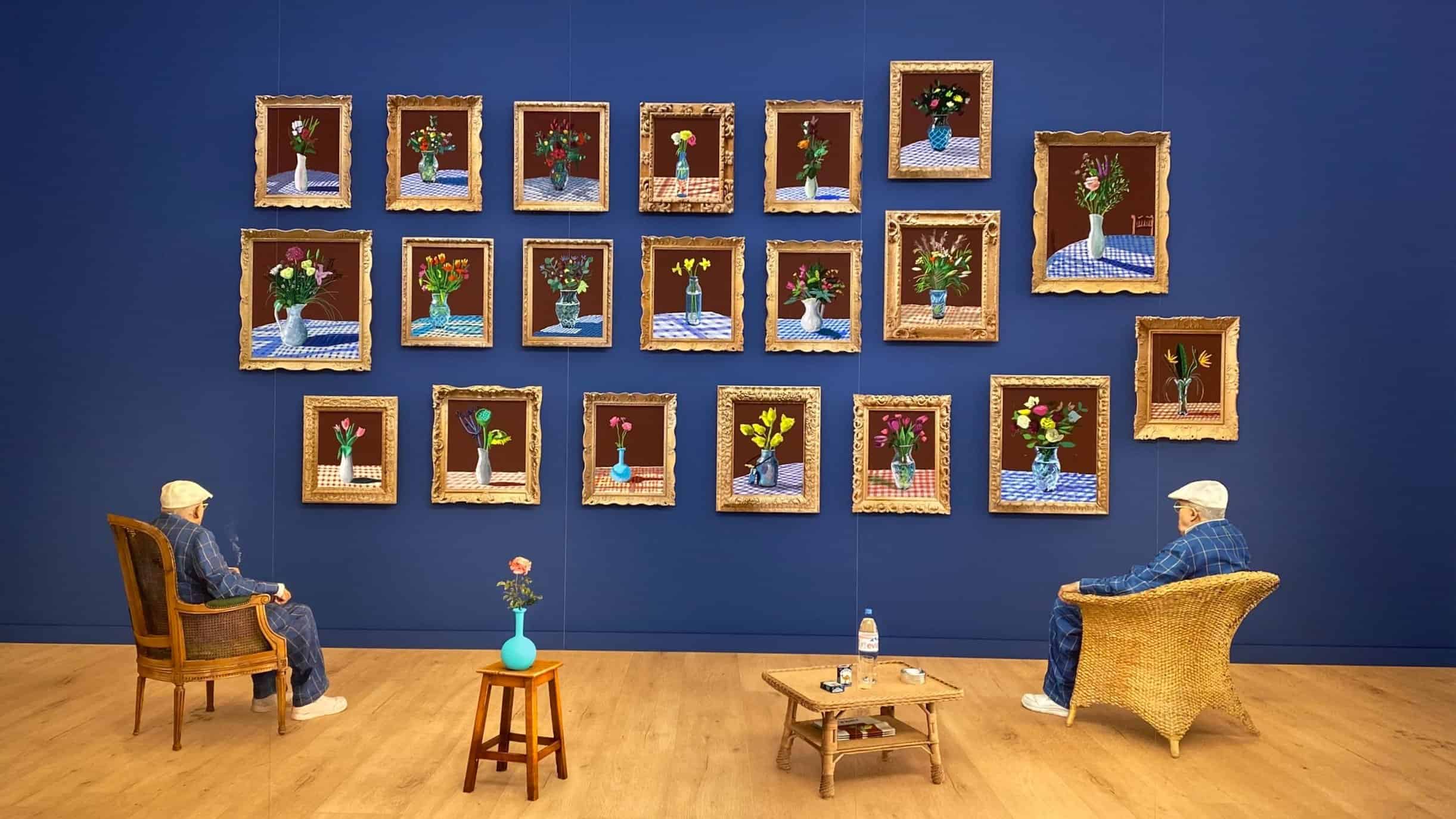
And this spirit was on display this spring in Portland: Drawn largely from the collections of philanthropist and collector Jordan Schnitzer and his family foundation, the exhibition brought together prints and works on paper spanning decades of Hockney’s career.
California Dreaming
Rather than presenting a single narrative, the exhibition traced the artist’s evolving interests, from portraiture and literary references to photography, landscape and questions of perspective. Visitors encountered an artist continually reinventing himself while remaining recognisably Hockney.
“The label Pop Art [when applied to Hockney’s work], for instance, is not quite accurate,” said Kimberly Davis, director of L.A. Louver Gallery when we met her a few months ago. “Pop Art would be dealing with popular culture. His body of work is really dealing with a sense of space, a sense of time.”
Davis, who worked closely with Hockney for decades, said the notion of the passage of time, and past inspirations, remained central to his practice. “He started with Picasso. The use of photography and making photo collages, and then which led to the Blue Guitar Series. That was all about that sense of time, which led to his approach to reverse perspectives.”
Throughout the decades, Hockney remained preoccupied with questions about how memory works, how perspective shapes experience, and how a flat image might capture the complexity of actually being present in a place.
Life in California also offered more than visual inspiration.
“He’s an Englishman, and a gay man who’s found a life in California that had a sense of freedom that allowed him to be who he was, much more so,” said Davis.
“That was why, other than sunshine, California attracted people – that all of those parts of his life could be lived without any sense of shame.”
“The basis of his work is that he draws beautifully,” Davis added. “It’s the line quality, and along with the colour, that is what sets him apart and makes things look simple and beautiful.”
Portlandic Culture
The exhibition was also part of a broader mission that has long animated Schnitzer’s collecting: bringing major artists and museum-quality exhibitions to communities outside the traditional centres of the art world.
Over the past three decades, Schnitzer has built a reputation as a public steward of art. His collection of more than 22,000 post-war and contemporary works operates like a lending library, circulating works to museums across the United States rather than keeping them out of view in storage.
For Schnitzer, the Portland presentation was never simply about celebrating a globally recognised artist. It was also about a broader philosophy about the role art plays in civic life.
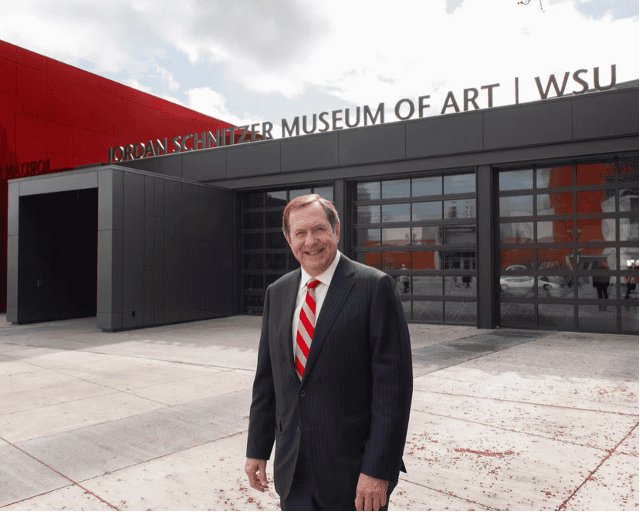
“What is a city without art and culture? You’ve got a bunch of buildings,” joked Schnitzer, as he led me on a tour of his art warehouse and gallery. “It is art and culture that is the soul of any community.”
The Hockney exhibition formed part of a broader effort by the Jordan Schnitzer Family Foundation to bring works by major artists to regional museums and communities that might otherwise have limited access to them.
“One thing we’ve done with our exhibitions — they’re free,” he said. “We give outreach money to all these museums to bring kids in, seniors, whatever the group is.”
Viewed through that lens, the Hockney exhibition was about more than introducing Portland audiences to one of the most influential artists of the last century. It was an invitation to engage with the ideas that shaped his work: perspective, observation, memory and perception, and to do so in a city that Schnitzer believes deserves access to the same cultural experiences as any major art capital.
For Schnitzer, success is measured less by attendance figures than by the impact an exhibition can have on an individual visitor.
“If one person’s life is forever changed, then maybe I’ve done something good that way.”